






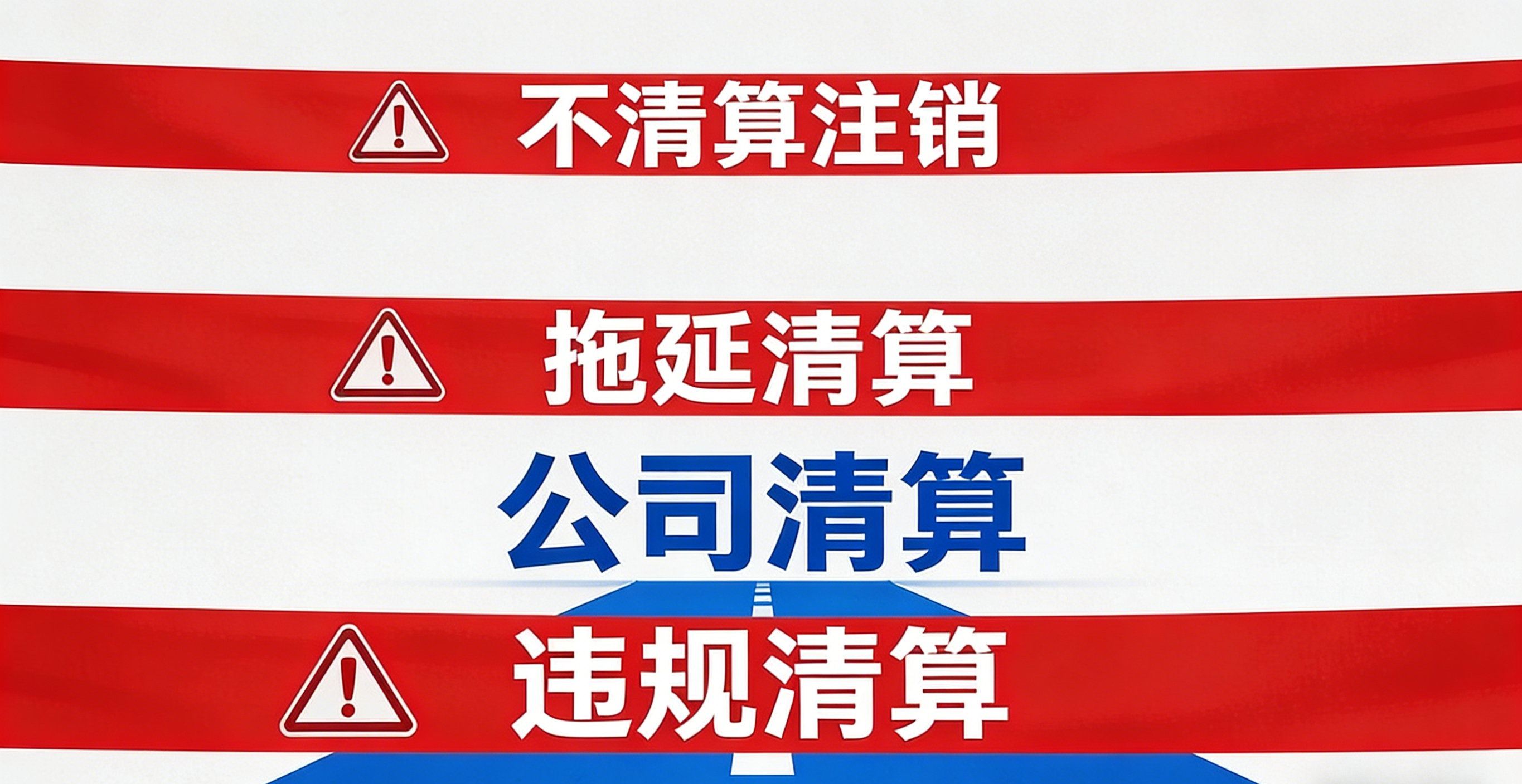
The liability of shareholders in liquidation is mainly stipulated in Articles 18, 19 and 20 of Interpretation II of the Company Law, namely "non-liquidation and cancellation", "delayed liquidation" and "illegal liquidation".
1. Non-liquidation and cancellation
Legal basis
Article 18, Paragraph 1 of the Company Law Interpretation II stipulates that
if the shareholders of a limited liability company, directors and controlling shareholders of a limited liability company fail to establish a liquidation team to start liquidation within the statutory time limit, resulting in the depreciation, loss, damage or loss of the company's property, and the creditor claims that it is liable for compensation for the company's debts within the scope of the losses caused, the people's court shall support it in accordance with the law.
Key tips
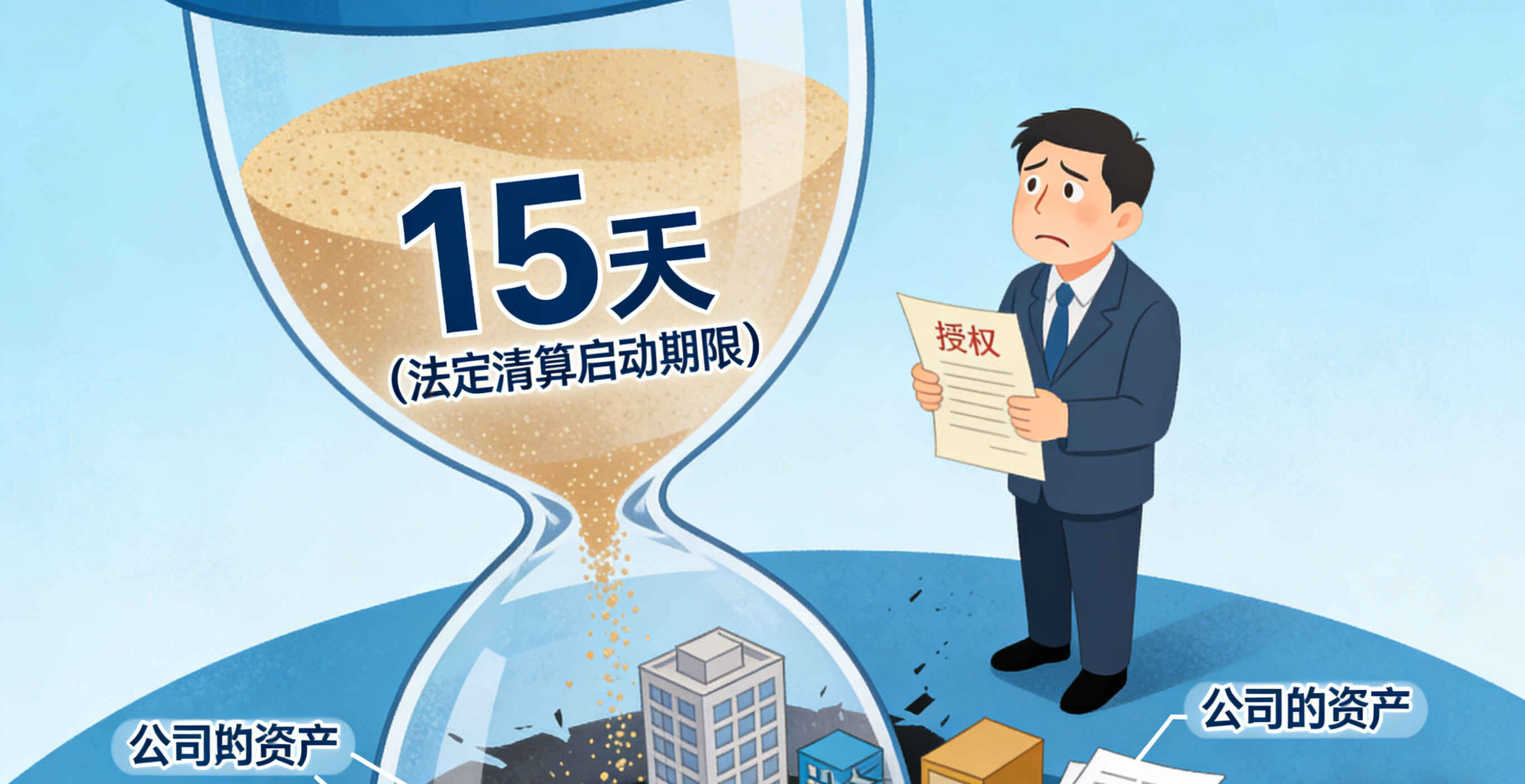
According to relevant laws, the company shall establish a liquidation team within 15 days from the date of dissolution. This clause achieves the purpose of urging the liquidation obligor to liquidate in accordance with the law and regulating the withdrawal of legal persons by transforming the liquidation responsibility into property liability.
Practical identification
In practice, we should note that although the legal provisions stipulate that the prerequisite for the application of this clause is that there is a causal relationship between the non-liquidation of shareholders and the non-payment of creditors. However, in judicial practice, courts often presume that the shareholder's inaction has caused losses to creditors for the purpose of protecting the interests of creditors, even if the creditor's rights have been confirmed by the effective judgment and the enforcement proceedings have been terminated before the debtor enters the liquidation proceedings.
Unless the debtor's shareholders can take the initiative to prove the depreciation, loss, or damage of the company's property, or the loss of the company's main assets, account books, important documents, etc., the inability to liquidate is not caused by their inaction.
Case guidance
In the case of (2020) Hu 02 Min Zhong No. 6160, although the shareholders argued that there was no causal relationship between the company's inaction and the creditor's failure to repay the company after the enforcement ruling had been established before the dissolution occurred, the court held that:
The original meaning of Article 18, paragraph 1 of the Company Law Interpretation II is that when a company is dissolved due to bankruptcy, it is presumed in principle that as long as the company is liquidated in accordance with the law, the creditors should be fully repaid in the liquidation procedure. Unless the liquidation obligor can provide evidence to prove that the reduction of the legal person's property is not caused by its failure to liquidate in time but is caused by other reasons, the liquidation obligor shall compensate for the part of the company's inability to pay off its debts. ”
2. Delay liquidation
Legal basis
Article 18, paragraph 2 of the Company Law Interpretation II stipulates that
if a shareholder of a limited liability company, directors and controlling shareholder of a limited liability company fail to perform their obligations, resulting in the loss of the company's main assets, account books, important documents, etc., and cannot be liquidated, and the creditor claims that he or she is jointly and severally liable for the company's debts, the people's court shall support it in accordance with the law.
Requirements for determining liability
In judicial practice, the determination of liability in this clause must meet the following three elements:
1. There is an inaction that neglects to perform its obligations
For example, negligence in liquidation work and negligence in performing obligations to properly keep company property, account books, documents, etc.
Defense: If the shareholder provides evidence to prove that he has taken positive measures to fulfill his liquidation obligations, or if the minority shareholder can prove that he is neither a member of the company's board of directors or the board of supervisors, nor has he appointed personnel to serve as a member of the organ, and has never participated in the operation and management of the company, it can be used as a defense that it does not constitute "negligence in performing obligations".
2. The company has incurred consequences that cannot be liquidated
Including the loss of important documents such as the company's account books and the loss of the company's main assets, which leads to the company's inability to liquidate.
Burden of proof: Because the loss of important documents such as the company's account books is in the hands of the defendant shareholders, the plaintiff, as a creditor, cannot grasp the company's property, operating conditions and other relevant evidence, so the burden of proof is inverted, that is, if the shareholders do not provide sufficient evidence to prove that the company has account books, important documents, etc. for liquidation, the burden of proof is applied. It should bear the responsibility of failing to provide evidence.
3. There is a causal relationship between negligence in fulfilling obligations and the consequences of not being able to liquidate
In determining this element, courts usually adopt the principles of presumption of causation and inversion of the burden of proof.
Case guidance
In the case of (2018) Hu 0109 Min Chu No. 27335, the court held that:
"Because the defendants Gong Chen and Wang Bingnan failed to fulfill their shareholder obligations, making Yihong Company unable to liquidate, resulting in the plaintiff's inability to recover its claims, and the defendants Gong Chen and Wang Bingnan did not provide evidence to prove that they had exemptions, it was determined that there was a causal relationship between the defendants Gong Chen and Wang Bingnan's negligence in performing their obligations and the consequences of Yihong's inability to liquidate."
3. Illegal liquidation
Legal basis
Article 19 of the Interpretation II of the Company Law stipulates that
the shareholders of a limited liability company, the directors and controlling shareholders of a limited liability company, and the actual controller of the company maliciously dispose of the company's property and cause losses to creditors after the dissolution of the company, or deceive the company registration authority with false liquidation reports to handle the deregistration of legal persons without liquidation in accordance with the law. If a creditor claims that it bears corresponding liability for the company's debts, the people's court shall support it in accordance with the law.
Two situations
01 The first situation: malicious disposal of the company's property
Malicious disposal of company property is generally manifested in embezzlement, private branch of company property, or sale of company property at an obviously unreasonable price.
-
De facto disposal: such as modifying or damaging the company's property -
Legal disposition: such as transferring property, abandoning property, forgiving debts, assuming debts, setting up mortgages on property, etc
Consequences: Malicious disposal of the company's property will cause the company's property to suffer losses, which in turn will lead to a decrease in the company's solvency.
Exceptions: If the property is increased in value by processing and transformation, it cannot be considered as malicious disposal of property.
02 The second situation: fraudulent cancellation
The determination of this clause in judicial practice is often accompanied by the application of Article 11, Paragraph 2 of Interpretation II of the Company Law.
Case guidance
In the case of (2020) Hu 01 Min Zhong No. 10699, the court held that:
"Although XX Company set up a liquidation team, issued a cancellation announcement, and issued a liquidation report, it did not provide evidence to prove that it had notified Zhongyin Company in writing of the relevant liquidation matters, resulting in Zhongyin Company ultimately failing to participate in the liquidation procedures such as declaring creditor's rights and distributing property; However, XX Company stated in the liquidation report that 'the liquidation team has notified all creditors within 10 days from the date of establishment, and the liquidation result is: the company's debts have been fully repaid', which is obviously untrue.
China's law stipulates that if a shareholder of a limited liability company defrauds the company registration authority with a false liquidation report to handle the cancellation of the registration of a legal person without liquidation in accordance with the law, and the creditor claims that he or she bears the corresponding liability for compensation for the company's debts, the people's court shall support it in accordance with the law. Therefore, Zhongyin Company requires Youzu Company and Yexiang Company to jointly bear the liability for compensation for the debts owed to XX Company, which is based on the law and is supported. ”
Summary
Although the current legal provisions on the self-liquidation of companies in China are relatively concentrated and easy to find, due to the lack of specific guidelines, companies will still face various problems when self-liquidating.
-
At the macro level: there should be corresponding legal documents as support in all aspects of the liquidation procedure, and the logical relationship between each legal document needs to be clarified -
Micro level: There are many details that need to be confirmed, such as whether it is necessary to make a separate official seal of the liquidation team during the liquidation process, and whether renting out the company's idle floors during the liquidation period constitutes an external business activity
Especially in judicial practice that focuses on protecting the interests of creditors, all aspects of liquidation need to be implemented, otherwise they will face liquidation liability.
-
- Brief Analysis of the Key Points of the Company's Liquidation Responsibilities (2) - Shareholder Responsibility
The liability of shareholders in liquidation is mainly stipulated in Articles 18, 19 and 20 of Interpretation II of the Company Law, namely "non-liquidation and cancellation", "delayed liquidation" and "illegal liquidation".182023-02 -
- Brief Analysis of the Key Points of the Company's Liquidation Responsibilities (1) - The Responsibility of the Liquidation Team
As an important subject of the current business society, one of the important characteristics of the company is that its shareholders are liable to the company up to the amount of subscribed capital contribution. However, in practice, it is precisely because of this understanding that the relevant entities (liquidation obligors) do not pay enough attention to the statutory procedures for the liquidation and cancellation of the company after the reason for dissolution arises.172023-02