





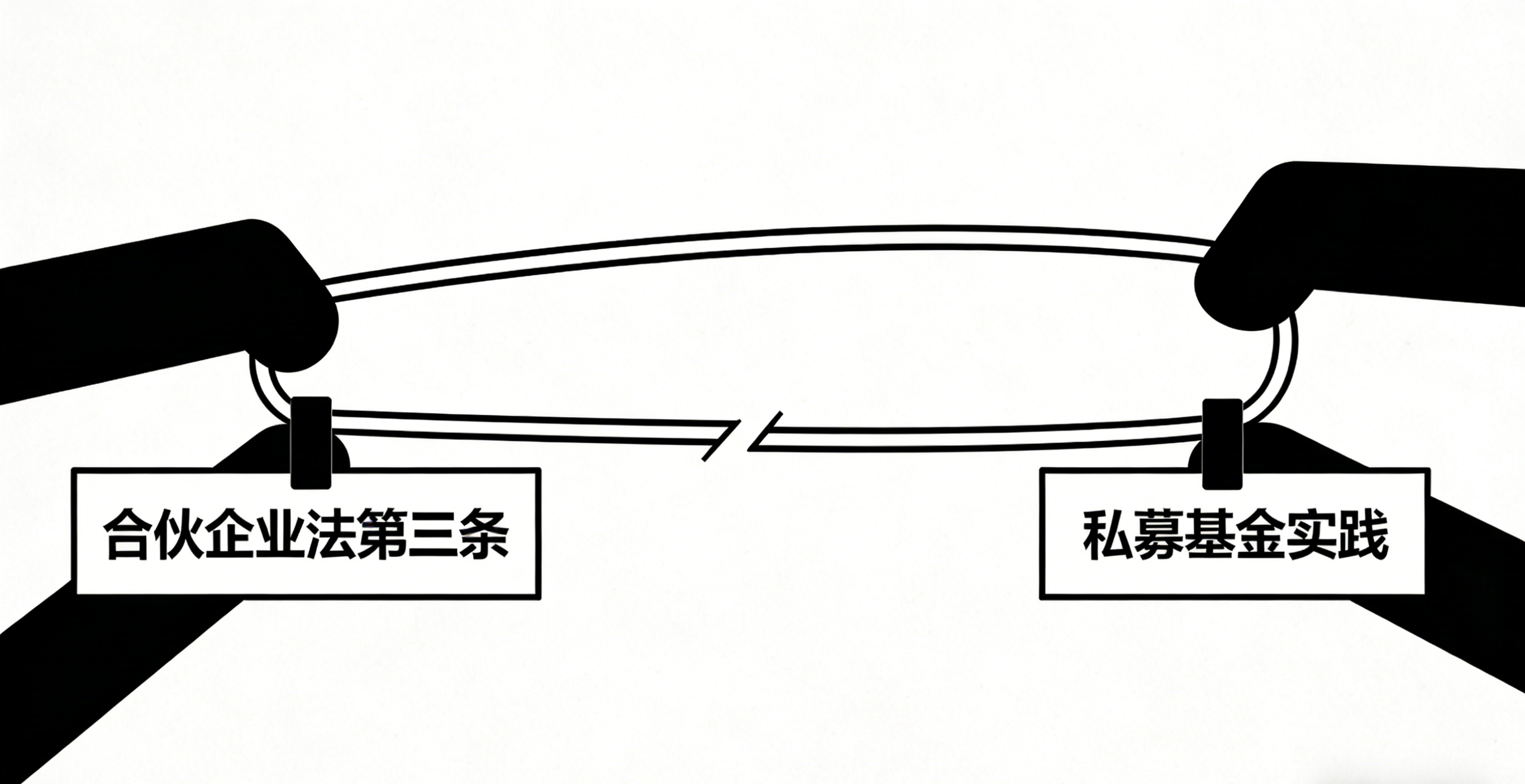
According to Article 3 of the Partnership Law of the People's Republic of China:
Wholly state-owned companies, state-owned enterprises, listed companies, public welfare institutions, and social organizations shall not become general partners.
The Company Law clearly stipulates the concept of a wholly state-owned company, but China's current legal system has not clearly defined what a "state-owned enterprise" is. According to the principle that the new law is superior to the old law, the latest legal norm on the identification of state-owned enterprises is the "Measures for the Supervision and Administration of State-owned Assets Transactions of Enterprises" (hereinafter referred to as "Order No. 32") jointly issued by the State-owned Assets Supervision and Administration Commission and the Ministry of Finance on June 24, 2016.
1. Identification criteria for state-owned enterprises
According to Article 4 of Order No. 32, the state-owned and state-controlled enterprises and state-controlled enterprises referred to in the Measures refer to:
(1) Wholly state-owned enterprises (companies) funded by government departments, institutions, and public institutions, as well as wholly-owned state-owned enterprises with a total of 100% direct or indirect shareholding by the above-mentioned units or enterprises;
(2) Enterprises listed in paragraph 1 of this article that contribute alone or jointly and have a total property (equity) ratio of more than 50%, and one of them is the largest shareholder;
(3) Subsidiaries at all levels with an equity ratio of more than 50% of the equity invested by the enterprises listed in paragraphs 1 and 2 of this article;
(4) Enterprises that directly or indirectly hold no more than 50% of the shares of government departments, institutions, public institutions, single state-owned and state-controlled enterprises, but are the largest shareholders and can actually control them through shareholders' agreements, articles of association, board resolutions, or other agreements.
According to the above provisions, state-owned enterprises should include the following four types:
| Type of enterprise | Identification criteria |
|---|---|
| Wholly state-owned enterprises (companies) | Enterprises (companies) established separately by government departments, institutions, and institutions |
| State-owned wholly-owned enterprises | Enterprises in which government departments, institutions, public institutions, and wholly state-owned enterprises directly or indirectly hold a total of 100% of the shares |
| State-owned holding enterprises | Government departments, institutions, public institutions, wholly state-owned enterprises, and wholly-owned state-owned enterprises hold more than 50% of the shares individually or collectively, and one of them is the largest shareholder |
| State-owned enterprises under actual control | Enterprises that directly or indirectly hold no more than 50% of the shares of government departments, institutions, public institutions, wholly state-owned enterprises, wholly-owned state-owned enterprises or state-controlled enterprises, but are the largest shareholders and can actually control them through agreements and arrangements |
2. Legal restrictions and practical breakthroughs
In summary, according to the relevant provisions of the Partnership Law and the Measures for the Supervision and Administration of Enterprise State-owned Asset Transactions, none of the above four types of state-owned enterprises can serve as partnership GPs.
However, in practice, especially in the field of private equity investment funds, state-owned enterprises are increasingly serving as GPs of limited partnership private equity investment funds. The specific cases are as follows:
01 Nanjing Yangtze River Investment Fund Management Co., Ltd
(Private fund manager number: P1008623, hereinafter referred to as "Nanjing Yangtze River")
Nanjing Yangtze River is a wholly-owned subsidiary of Nanjing Yangzi State-owned Assets Investment Group Co., Ltd., while Nanjing Yangzi State-owned Assets Investment Group Co., Ltd. is a wholly-owned subsidiary of the Nanjing Jiangbei New Area Management Committee. According to the provisions of Order No. 32, Nanjing Yangtze River is a wholly-owned state-owned enterprise.
According to the information published by the Asset Management Association of China, Nanjing Yangzijiang has registered the GP of the following funds and serves as the executive partner:
-
Nanjing Jiangbei Infrastructure Equity Investment Fund (Limited Partnership) -
Nanjing Yangzi Science and Technology Venture Equity Investment Fund (Limited Partnership) -
Nanjing Jiangbei High-tech Industry Development Equity Investment Fund (Limited Partnership) -
Nanjing Yangtze Environmental Infrastructure Investment Fund Phase I Enterprise (Limited Partnership)
In addition, according to industrial and commercial inquiries, Nanjing Yangtze River is also the GP of four limited partnerships (non-filed funds).
02 Fujian National Reform Investment Fund Management Co., Ltd
(hereinafter referred to as "Fujian National Reform")
The controlling shareholder of Fujian National Reform is Fujian State-owned Asset Management Co., Ltd., which holds 51% of the equity and is the largest shareholder. Fujian State-owned Asset Management Co., Ltd. is a wholly-owned state-owned company established by the State-owned Assets Supervision and Administration Commission of the Fujian Provincial Government. According to Order No. 32, Fujian State was changed to a state-owned holding company.
According to the information published by the Asset Management Association of China, Fujian National Reform is the GP of the following funds and serves as an executive partner:
-
Fujian State-owned Enterprise Reform and Restructuring Investment Fund (Limited Partnership) -
Fujian Juhong Rare Metals Investment Partnership (Limited Partnership)
3. Conclusion
Although the current Partnership Enterprise Law stipulates that "wholly state-owned companies and state-owned enterprises" are not allowed to serve as general partners of partnerships; However, in practice, whether it is a wholly-owned state-owned enterprise or a state-controlled enterprise, there are partnerships in which it serves as a GP to complete the industrial and commercial establishment registration, and even complete the registration and filing with the Asset Management Association.
Legal practice has actually broken through the provisions of the Partnership Law that state-owned enterprises cannot serve as GPs.
-
- The Shareholder's Capital Contribution Period Interest After the Case Is Finalized
One of the distinctive features of China's Company Law is the implementation of the registered capital system, and at the same time the implementation of the subscribed registered capital system, under normal circumstances, shareholders enjoy the benefits of their subscribed capital contributions, and do not have the current capital contribution obligation for subscribed capital contributions that have not expired.202023-04 -
- Risks and Prevention Suggestions in the Company's Equity Transfer
Generally speaking, equity transactions are relatively important and complex, so it is necessary to enter into a written agreement to clarify the rights and obligations of both parties to the equity transaction in the agreement to achieve the purpose of reducing disputes. However, in actual transactions, there will be the following two forms of irregular equity transfer:202023-03