






This year, we witnessed history while wearing masks. When the news of Wuhan's lockdown came, and when medical teams rushed to aid Hubei overnight, the rule of law demonstrated its strength in times of crisis: law-based prevention and control, and law-based governance kept the order of 1.4 billion people stable amid the stormy waves. This year, the Civil Code was born — with 1,260 articles and more than 100,000 characters, it carries the long-cherished wish of several generations and ushers in a new era of civil rights protection under a codified law. This was a year of standing tall through hardships and rebirth under the rule of law.
I. Fighting COVID-19: Winning the Battle on the Track of the Rule of Law
"The tougher the epidemic prevention and control becomes, the more we must adhere to law-based prevention and control."
【Event Review】
In 2020, the sudden COVID-19 pandemic spread across the world. Faced with this major test of the epidemic, the Party Central Committee with Xi Jinping at its core adhered toputting people and lives first, and quickly launched a people's war, a general war, and a resistance war against the epidemic. It took over a month to initially contain the spread of the epidemic, about two months to control the daily number of new local confirmed cases to single digits, and about three months to achieve a decisive victory in the defense of Wuhan and Hubei.
On September 8, theNational Commendation Conference for Fighting COVID-19 was grandly held in the Great Hall of the People in Beijing.
【Luheng's Perspective】
For epidemic prevention and control, the rule of law comes first. During the epidemic, the Supreme People's Court and the Supreme People's Procuratorate intensively issued multiple batches of typical cases of punishing crimes that hinder epidemic prevention and control in accordance with the law, involving illegal acts such as price gouging, production and sale of fake and shoddy goods, refusal of quarantine, and spreading rumors.
In accordance with the Criminal Law and the judicial interpretations of the two Supreme People's Courts and Procuratorates, acts of price gouging for protective supplies and seeking excessive profits during the epidemic can be convicted and punished for the crime ofillegal business operation; acts of concealing travel history in key epidemic areas and refusing to implement quarantine measures resulting in virus transmission can be held criminally responsible for the crime ofendangering public security by dangerous means.
At the same time, epidemic prevention and control also exposed shortcomings in China's public health emergency management system. During the Two Sessions, many deputies and committee members called for improving the construction of the national public health emergency management system, revising the Emergency Response Law and the Law on the Prevention and Treatment of Infectious Diseases, simplifying the epidemic information reporting process, and establishing an emergency supplies reserve system. These suggestions provided an important reference for improving China's public health legal system.
II. Birth of the Civil Code: China's First "Code" Ushering in a New Era of Rights Protection
"An encyclopedia of social life, the long-cherished wish of several generations has finally come true."
【Event Review】
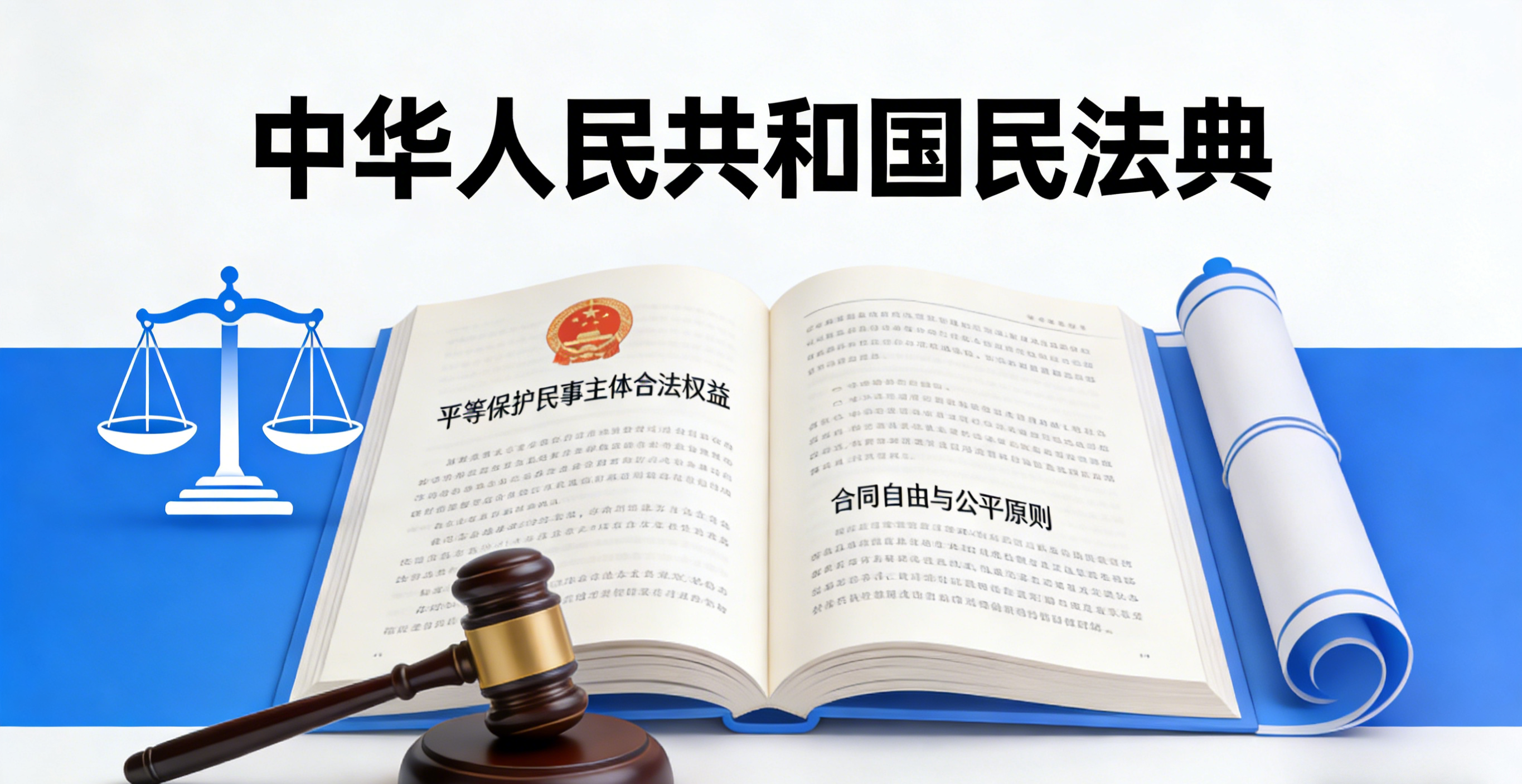
On May 28, 2020, the Third Session of the 13th National People's Congress voted to adopt theCivil Code of the People's Republic of China. President Xi Jinping signed a presidential decree to promulgate it, which came into force on January 1, 2021. This is the first law named "Code" since the founding of the People's Republic of China, consisting of7 parts with 1,260 articles and more than 100,000 characters, covering all aspects of social life. The Civil Code systematically integrates the civil legal norms formed through long-term practice over 70 years and is known as "an encyclopedia of social life".
【Luheng's Perspective】
The birth of the Civil Code is the most dazzling milestone in the construction of the rule of law in China in 2020. From a legal perspective, three highlights of the Civil Code are particularly worthy of attention:
First, it actively responds to social hotspots and pain points. Targeting the "urban tumor" of high-altitude parabolic objects, the Civil Code explicitly prohibits throwing objects from buildings, and requires public security organs and other relevant departments to investigate in a timely manner in accordance with the law to identify the responsible person. In response to chaos such as "routine loans" and "campus loans", the Civil Code explicitly prohibits usurious lending, and the interest rate of loans shall not violate the relevant provisions of the state.
Second, the independent compilation of personality rights demonstrates humanistic care. Among the civil codes of countries around the world, there is no independent compilation of personality rights system. China's Civil Code compiles personality rights independently, which not only makes up for the systemic defect of "valuing things over people" in the traditional civil law system, but also strengthens the protection of privacy and personal information, responding to the new challenges faced by the protection of personality rights in the Internet era.
Third, it organically combines the rule of law with the rule of virtue. The Civil Code emphasizes the moral restraint of legal rules and the legal support of moral norms. For example, Article 10 stipulates that habits not contrary to public order and good morals may be applied in handling civil disputes, guiding people's hearts with traditional virtues. The promulgation of the Civil Code marks that the protection of civil rights in China has entered anew era.
III. Enactment and Implementation of the Hong Kong National Security Law: Legal Guarantee for "One Country, Two Systems"
"The sharp sword is unsheathed to protect Xiangjiang River."
【Event Review】
On June 30, 2020, the 20th Session of the Standing Committee of the 13th National People's Congress voted to adopt theLaw of the People's Republic of China on Safeguarding National Security of the Hong Kong Special Administrative Region. President Xi Jinping signed a presidential decree to promulgate it, which came into force on the date of promulgation. The law has made legalized, standardized and clarified specific arrangements for the systems and mechanisms for safeguarding national security in Hong Kong, and defined the charges and penalties for four categories of crimes endangering national security.
【Luheng's Perspective】
The enactment and implementation of the Hong Kong National Security Law is an important milestone in the practice of "One Country, Two Systems". From a legal perspective, the law has the following characteristics:
First, it fills the legal gap. For more than 20 years since Hong Kong's return, due to various reasons, there have been obvious loopholes in the legal systems and enforcement mechanisms for safeguarding national security. The Hong Kong National Security Law has established and improved relevant systems and mechanisms at the national level,plugging the legal loopholes in Hong Kong's safeguarding of national security.
Second, it clarifies crimes and penalties. The law clearly stipulates the constitutive elements and penalty standards for four categories of criminal acts: secession, subversion of state power, terrorist activities, and colluding with foreign or external forces to endanger national security, providing a clear basis for law enforcement and judicial work.
Third, it safeguards Hong Kong's prosperity and stability. The law clearly adheres to the policy of "One Country, Two Systems", follows the principle of "Hong Kong people governing Hong Kong" with a high degree of autonomy. While preventing, suppressing and punishing crimes endangering national security, it protects the rights and freedoms enjoyed by Hong Kong residents in accordance with the law, and safeguards the legitimate rights and interests of foreigners in Hong Kong.
As public opinion has commented, the implementation of the Hong Kong National Security Law has provided a solid legal support for safeguarding national security and long-term stability of Hong Kong, and ensuring the steady and far-reaching progress of "One Country, Two Systems".
IV. Complete Victory in Poverty Alleviation: The Rule of Law Escorts Building a Moderately Prosperous Society in All Respects
"On the road to building a moderately prosperous society in all respects, no one should be left behind — the rule of law is the strongest backing for this promise."
【Event Review】
On November 23, 2020, Guizhou Province announced that all the remaining 9 impoverished counties that had not been lifted out of poverty were removed from the poverty list. So far,all 832 impoverished counties across the country have been lifted out of poverty. After 8 years of continuous struggle, all rural poor people under China's current standard have been lifted out of poverty, eliminating absolute poverty and regional overall poverty, and achieving the poverty reduction goal of the United Nations 2030 Agenda for Sustainable Development 10 years ahead of schedule. This isa miracle in the history of human poverty reduction.
【Luheng's Perspective】
The complete victory in poverty alleviation is inseparable from the strong guarantee of the rule of law. From a legal perspective, the legal practice in poverty alleviation is mainly reflected in the following aspects:
First, the supervision of poverty alleviation funds is legalized. Procuratorial organs have increased efforts to investigate and deal with duty crimes in the field of poverty alleviation, and punished crimes such as falsely claiming, intercepting and embezzling, and misappropriating poverty alleviation funds in accordance with the law. In 2020, the Supreme People's Procuratorate issued multiple typical cases of the rapid return of property involved in criminal cases related to poverty alleviation in accordance with the law, ensuring that poverty alleviation funds areaccurately delivered to poor people.
Second, poverty alleviation through relocation is promoted in accordance with the law. The revised Land Administration Law came into force on January 1, 2020, allowing the entry of collectively-owned operational construction land into the market, providing land element guarantee for poverty alleviation through relocation and rural industrial development.
Third, poverty governance is incorporated into the track of the rule of law. The Regulations on Optimizing the Business Environment came into force on January 1, 2020, providing a law-based business environment for impoverished areas to develop industries and attract investment. Various measures in poverty alleviation work, such as industrial development, employment assistance, education and medical care, are all carried out in an orderly manner within the legal framework.
UN Secretary-General António Guterres highly commented: "The targeted poverty alleviation strategy is the only way to help the poorest people and achieve the goals of the 2030 Agenda for Sustainable Development." Behind China's poverty reduction miracle is thesolid support of the rule of law.
V. "The First Case of Facial Recognition": Judicial Sword for Personal Information Protection
"The application of technology cannot come at the cost of citizens' personal information security."
【Event Review】
-
- What have we all Experienced in 2025
Standing at the intersection of the conclusion of the 14th Five-Year Plan and the start of the 15th Five-Year Plan, 2025 outlines the future with the brush of the rule of law. The Fourth Plenary Session of the 20th Central Committee of the Communist Party of China set the tone for the next five years, the official implementation of the Private Economy Promotion Law has given private enterprises a "reassurance pill", and the Public Security Administration Punishment Law has undergone its first major revision in nearly 20 years.212026-01 -
- Interpretation of the Building Law of the People's Republic of China
Legal Provisions:Article 19: Construction projects shall be awarded through bidding in accordance with law, and direct contracting may be adopted for those not suitable for bidding.312025-03