






I. Regarding Project Contracting Out
1. Can the contracting-out party freely choose the method of contracting out when awarding a project?
Legal Provisions:Article 19: Construction projects shall be awarded through bidding in accordance with law, and direct contracting may be adopted for those not suitable for bidding.
Analysis:The law establishes the priority of bidding for contracting out, as this method adapts to the market economy and embodies fair competition. In the construction field, the contracting-out party discloses project information and allows qualified units to participate in bidding, regardless of their geographical location or background. This enables the contracting-out party to select contracting units with both good reputation and technical capabilities from a broader scope. Although direct contracting is necessary under specific conditions, it is restricted by law because it is difficult to carry out open competition.
2. What procedural regulations must the contracting-out party comply with during the bidding process?
Legal Provisions: Article 20: For construction projects subject to open bidding, the contracting-out unit shall issue a bidding announcement in accordance with legal procedures and methods, and provide bidding documents containing key technical requirements of the bidding project, main contract terms, bid evaluation criteria and methods, as well as procedures for bid opening, bid evaluation and bid awarding. Bid opening shall be conducted publicly at the time and place specified in the bidding documents. After bid opening, the bids shall be evaluated and compared in accordance with the bid evaluation criteria and procedures specified in the bidding documents, and the successful bidder shall be selected optimally among the bidders with corresponding qualification conditions. Article 21: The bid opening, bid evaluation and bid awarding for the bidding of construction projects shall be organized and implemented by the construction unit in accordance with law, and subject to the supervision of the relevant administrative departments. Article 23: Governments and their subordinate departments shall not abuse administrative power to restrict contracting-out units from awarding construction projects subject to bidding to designated contracting units.
Analysis:The bidding process must be open and transparent to ensure its fairness. Key steps include: for open bidding, the contracting-out unit shall issue a bidding announcement in accordance with law, and the bidding documents shall detail key information such as technical requirements, contract terms, and bid evaluation criteria. Bid opening activities shall be conducted publicly. The bid evaluation and bid awarding process shall comply with the provisions in the bidding documents to ensure the fairness and scientificity of the bid evaluation process, and ultimately select the successful bidder with appropriate qualifications. At the same time, improper intervention by government departments in bidding and contracting out must be excluded, and the rights and obligations determined by the bidding and tendering transaction method must be respected.
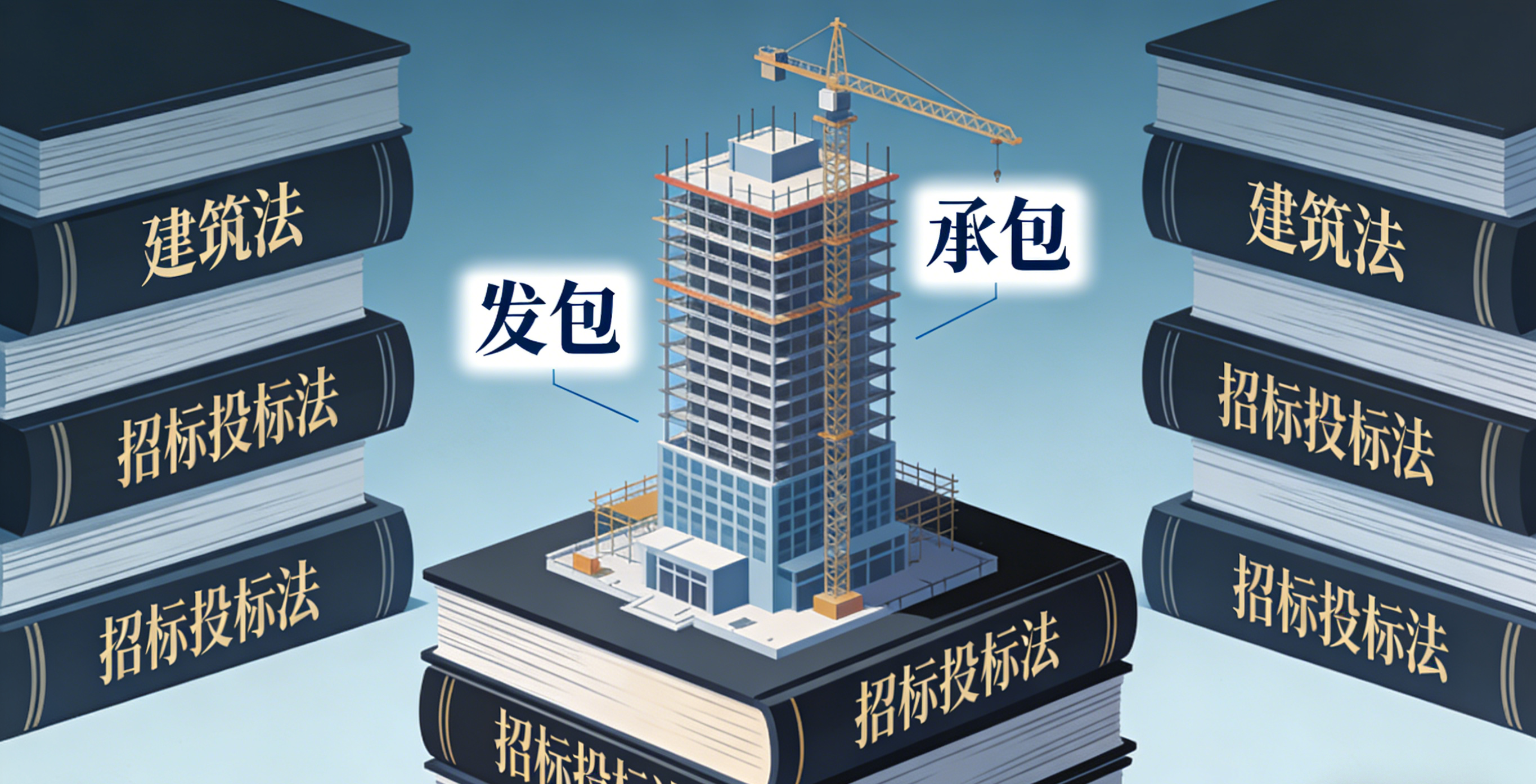
3. What legal liabilities shall the contracting-out unit bear if it awards a project to a contracting unit without corresponding qualification conditions?
Legal Provisions: Article 22: For construction projects awarded through bidding, the contracting-out unit shall award the construction project to the legally winning contracting unit. For construction projects awarded through direct contracting, the contracting-out unit shall award the construction project to a contracting unit with corresponding qualification conditions. Article 65 (1): If a contracting-out unit awards a project to a contracting unit without corresponding qualification conditions, or dismembers and awards a construction project in violation of the provisions of this Law, it shall be ordered to make corrections and imposed a fine.
Analysis:"Corresponding qualification conditions" mean that the contracting unit must have a qualification certificate for construction activities, and its qualification grade and business scope meet the requirements of the contracted project. The contracting-out unit shall examine the qualifications of the contracting unit and may only award the project to units that meet the conditions. If the contracting-out unit awards a project to a contracting unit without qualifications, the administrative law enforcement agency shall order it to make corrections and impose a fine. Ordering corrections means requiring the contracting-out unit to stop the illegal contracting-out act, take back the project, and terminate the invalid contract. The handling of losses after the contract becomes invalid shall be in accordance with Article 157 of the Civil Code of the People's Republic of China. The amount of the fine shall be specified in the implementing rules of the State Council.
4. What legal liabilities shall the contracting-out unit bear if it dismembers and awards a construction project?
Legal Provisions: Article 24: General contracting for construction projects is advocated, and dismembering and awarding construction projects is prohibited. The contracting-out unit of a construction project may award the survey, design, construction, and equipment procurement of the construction project to a single general contracting unit in a lump sum, or award one or more of the survey, design, construction, and equipment procurement of the construction project to a single general contracting unit; however, it shall not dismember a construction project that should be completed by a single contracting unit into several parts and award them to several contracting units. Article 65: If a contracting-out unit awards a project to a contracting unit without corresponding qualification conditions, or dismembers and awards a construction project in violation of the provisions of this Law, it shall be ordered to make corrections and imposed a fine.
Analysis:The law explicitly prohibits contracting-out units from splitting a project that should be undertaken as a whole by a single contracting unit into multiple parts and awarding them to different contracting units respectively; dismembering and awarding projects is prohibited, that is, it is not allowed to dismember a construction project that should be completed by a single contracting unit into several parts and award them to several contracting units. Theoretically, artificially and unreasonably dividing an integral whole into several parts will cause waste and reduce efficiency; in practice, the result of dismembering a project is mutual buck-passing, increased costs, and chaotic management, so this harmful practice should be prohibited. Secondly, general contracting can be either lump-sum contracting or item-by-item general contracting. Therefore, Article 24 of the Construction Law stipulates that the contracting-out unit of a construction project may award the survey, design, construction, and equipment procurement of the construction project to a single general contracting unit in a lump sum, or award one or more of the survey, design, construction, and equipment procurement of the construction project to a single general contracting unit. In accordance with this provision, the construction unit is Party A and the general contracting unit is Party B. Party A may enter into a contract with one Party B, or may enter into contracts with several Party Bs. For contracting-out units that violate this provision, the relevant administrative law enforcement agency shall order them to immediately stop the illegal act and impose a fine on them. The so-called "order to make corrections" means that the administrative law enforcement agency requires the contracting-out unit to immediately terminate its illegal act of dismembering and awarding the project, take back the project that has been split and awarded, and bear corresponding responsibilities for the losses arising therefrom.
5. Can the contracting-out unit designate building materials, building components and fittings, equipment, or designate manufacturers/suppliers for the project?
Legal Provisions: Article 25: Where, in accordance with the contract agreement, building materials, building components and fittings, and equipment are to be purchased by the project contracting unit, the contracting-out unit shall not designate the contracting unit to purchase building materials, building components and fittings, and equipment for the project, or designate manufacturers or suppliers.
Analysis:If agreed in the contract, the contracting-out unit shall not designate the contracting unit to purchase building materials, building components and fittings, and equipment for the project, or designate manufacturers or suppliers. This restricts the contracting-out unit from violating the contract agreement by taking advantage of its favorable position; protects the rights of the contracting unit as determined in the contract, and also helps to clarify its responsibilities; prevents seeking improper interests by designating manufacturers or suppliers, which may affect project quality.
II. Regarding Project Contracting
1. What liabilities shall joint contracting units bear?
Legal Provisions: Article 27: Large-scale construction projects or construction projects with complex structures may be jointly contracted by two or more contracting units. All parties to the joint contracting shall bear joint and several liability for the performance of the contracting contract. Where two or more units of different qualification grades jointly contract a project, they shall undertake the project within the scope of business permitted by the unit with the lower qualification grade.
Analysis:In response to large-scale or complex-structured construction projects, a single contractor may not be able to undertake the entire project independently. In such cases, two or more contracting units may form a consortium to undertake the project jointly. The joint contracting units shall bear joint and several liability to the outside world for the performance of the contracting contract. Therefore, each contractor involved in joint contracting must pay special attention to the following two points:
-
The scope of joint and several liability covers the performance of the entire contracting contract. -
Joint and several liable parties refer to those contractors who sign the joint contracting agreement and participate in the project jointly.
It should be noted that if the joint contracting units have different qualification grades, the scope of business they can undertake shall be determined by the lowest qualification grade (the principle of "lower level prevails").
2. What project quality liabilities does the general contracting unit bear for a construction project under general contracting?
Legal Provisions: Article 29 (2): The general contracting unit of a construction project shall be responsible to the construction unit in accordance with the agreement of the general contracting contract; the subcontracting unit shall be responsible to the general contracting unit in accordance with the agreement of the subcontracting contract. The general contracting unit and the subcontracting unit shall bear joint and several liability to the construction unit for the subcontracting project.
Analysis:The general contracting unit shall be responsible to the construction unit. Therefore, if the general contracting unit intends to subcontract the project after contracting it, it must carefully select subcontracting units with adequate qualifications and supervise the construction of the subcontracting units during the construction process.
3. After contracting a project, can the general contracting unit subcontract or transfer the project again?
Legal Provisions: Article 28: Contracting units are prohibited from transferring the entire contracted construction project to others, and from dismembering the entire contracted construction project and transferring it to others in the name of subcontracting. Article 29 (1): A general contracting unit of a construction project may subcontract part of the contracted project to a subcontracting unit with corresponding qualification conditions; however, except for subcontracting agreed in the general contracting contract, it must be approved by the construction unit. For construction projects under general contracting, the construction of the main structure of the building must be completed by the general contracting unit itself. Article 29 (3): General contracting units are prohibited from subcontracting projects to units without corresponding qualification conditions. Subcontracting units are prohibited from subcontracting the contracted projects again.
Analysis:First of all, the general contracting unit may carry out subcontracting, but the subcontracting by the general contractor needs to be agreed in the contract. If the general contracting unit has not agreed on subcontracting matters with the construction unit in advance, it must obtain the approval of the construction unit before subcontracting. Secondly, the general contracting unit should pay attention to three points during the subcontracting process:
-
The main structure of the building shall not be subcontracted or transferred; -
The general contracting unit shall not dismember the entire contracted construction project and then subcontract or transfer it; -
Subcontracting units must have corresponding qualifications, and subcontracting units shall not subcontract again.
-
- What have we all Experienced in 2025
Standing at the intersection of the conclusion of the 14th Five-Year Plan and the start of the 15th Five-Year Plan, 2025 outlines the future with the brush of the rule of law. The Fourth Plenary Session of the 20th Central Committee of the Communist Party of China set the tone for the next five years, the official implementation of the Private Economy Promotion Law has given private enterprises a "reassurance pill", and the Public Security Administration Punishment Law has undergone its first major revision in nearly 20 years.212026-01 -
- Interpretation of the Building Law of the People's Republic of China
Legal Provisions:Article 19: Construction projects shall be awarded through bidding in accordance with law, and direct contracting may be adopted for those not suitable for bidding.312025-03