






In order to further protect the legitimate rights and interests of investors, smooth the channels for investors' rights relief, and strictly crack down on illegal and irregular activities such as financial fraud in the securities market in accordance with the law, on January 21, 2022, the Supreme People's Court issued the "Several Provisions of the Supreme People's Court on the Trial of Civil Compensation Cases for False Statements in the Securities Market" (hereinafter referred to as the "new version of the" Several Provisions "). On the basis of integrating the relevant content of the original judicial interpretations, the new version of "Several Provisions" has added 15 important articles, ultimately forming 35 articles, which are divided into eight chapters: general provisions, determination of false statements, materiality and causal relationship of transactions, fault determination, responsible party, loss determination, statute of limitations, and supplementary provisions.
The new version of the "Several Provisions" is a systematic modification and improvement of the "Several Provisions of the Supreme People's Court on the Trial of Civil Compensation Cases for False Statement Infringement in the Securities Market" (hereinafter referred to as the "old version of the" Several Provisions ") implemented on February 1, 2003. Since 2003, China's securities market has undergone 19 years of development, and the entire market environment and ecology have undergone earth shaking changes. The introduction of the new version of the" Several Provisions "is of great significance for promoting the comprehensive deepening reform of China's capital market, urging market participants to fulfill their responsibilities, and safeguarding the legitimate rights and interests of investors.
By comparing the old and new versions of the "Several Regulations", it is found that the new version mainly has the following highlights in terms of content:
1、 Expand the scope of application
The first article of the new version of "Several Provisions" stipulates:
Article 1 of the new version of the "Several Provisions" stipulates that in civil compensation cases of false statement infringement that occur in regional equity markets established in accordance with the regulations of the State Council, this provision may be applied with reference.
The above regulations specify that, in addition to trading venues such as the Shanghai Stock Exchange, Shenzhen Stock Exchange, Beijing Stock Exchange, and National Equities Exchange and Quotations, false statements that occur in local regional equity trading markets (i.e. the "New Fourth Board") can also be applied in accordance with these regulations.
2、 Cancel the pre program
The first article of the new version of "Several Provisions" stipulates:
If the plaintiff files a civil compensation lawsuit for securities false statement infringement, which complies with Article 122 of the Civil Procedure Law, and submits the following evidence or supporting materials, the people's court shall accept it:
(1) Relevant documents proving the plaintiff's identity;(2) Evidence of false statements made by the information disclosure obligor;(3) The plaintiff provided evidence of transaction vouchers and investment losses due to false statements.
The people's court shall not rule to reject false statements solely on the grounds that they have not been subject to administrative penalties by regulatory authorities or recognized by effective criminal judgments of the people's court.
The above provisions clarify that being subject to administrative or criminal penalties is no longer a prerequisite for investors to pursue the compensation responsibility for false statements of listed companies. People's courts accepting civil compensation cases for false statements shall not be subject to administrative or criminal processing as a prerequisite.

3、 Revise the jurisdictional principle to clarify that it is under the jurisdiction of the intermediate court in the location of the issuer
The original "Several Provisions" stipulate that if an investor files a civil compensation lawsuit against multiple defendants, the competent court shall be determined according to different circumstances. However, the new version of the "Several Provisions" cancels the principle of determining jurisdiction based on individual circumstances and directly stipulates:
Civil compensation cases for securities false statements shall be under the jurisdiction of the intermediate or specialized people's courts of the city where the people's government of the province, autonomous region, or municipality directly under the Central Government is located, the city specifically designated in the state plan, and the economic special zone where the issuer resides.
4、 Added false statements of misleading nature
The original version of the "Several Provisions" only stipulates that investors who purchase securities from issuers due to false statements, resulting in losses, can claim compensation from them. However, with the development of the securities market, in practice, it is still common for investors to suffer losses by deliberately creating negative conditions due to securities issuers, known as "short selling fraud".
In response to the above situation, the new version of the "Several Provisions" clearly stipulates that the act of "selling relevant securities in false statements that lure short positions" also belongs to a type of causal relationship, that is, claims can also be made against the information discloser.
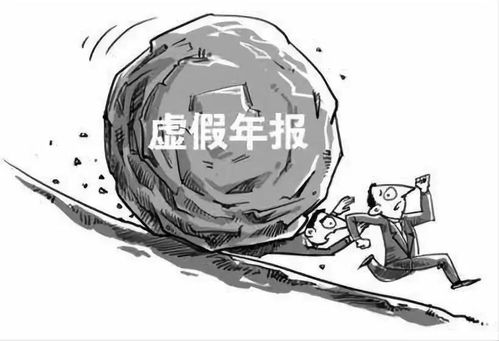
5、 Clarify the circumstances in which sponsoring agencies, underwriting agencies, and accounting firms are exempt from liability
Article 17 of the new version of "Several Provisions" stipulates:
If the due diligence work papers, due diligence reports, internal audit opinions and other evidence submitted by sponsoring institutions, underwriting institutions and their directly responsible personnel can prove the following situations, the people's court shall determine that they are not at fault:
(1) We have conducted due diligence on the relevant content of the information disclosure documents in accordance with the requirements of laws, administrative regulations, regulatory authorities' rules and normative documents, and relevant industry practice norms;
(2) For important content in the information disclosure document that is not supported by professional opinions from securities service institutions, after careful due diligence and independent judgment, there are reasonable grounds to believe that this part of the content is consistent with the true situation;
(3) After careful verification and necessary investigation and review of the important content of the professional opinions issued by securities service institutions in the information disclosure documents, reasonable grounds have been used to eliminate professional doubts and form reasonable trust.
Securities companies engaged in listing and targeted issuance recommendation business on the National Equities Exchange and Quotations shall be subject to the provisions of the preceding paragraph.
In addition, Article 19 of the new version of the "Several Provisions" stipulates that:
If an accounting firm can prove any of the following circumstances, the people's court shall determine that it is not at fault:
(1) According to the work procedures and verification methods determined by the professional standards and rules, and maintaining necessary professional caution, no errors have been found in the audited accounting information;
(2) The audit business must rely on financial institutions, issuers' suppliers, customers and other relevant units to provide false certification documents, and the accounting firm has maintained necessary professional caution but has not yet discovered them;
(3) Warning has been given to the issuer regarding signs of fraud and a prudent audit opinion has been issued in the audit report;
(4) Other circumstances that can prove no fault.
By reading the above regulations, although the new rules clarify the exemption of intermediary institutions such as sponsors, underwriters, and accounting firms, the relevant provisions are still relatively vague and vague. The boundaries of what constitutes "due diligence", "necessary professional caution", "reasonable grounds", etc. are not specifically defined, which can easily lead to differences and disputes in the specific practice process.
6、 Clarify the principle of 'pursuing the evil leader'
Article 20 of the new version of "Several Provisions" stipulates:
If the controlling shareholder or actual controller of the issuer organizes or instructs the issuer to make false statements, causing the plaintiff to suffer losses in securities trading, and the plaintiff requests a direct order for the controlling shareholder or actual controller to compensate for the losses in accordance with these regulations, the people's court shall support it.
The above regulations clarify that in cases where controlling shareholders and actual controllers organize financial fraud, release false information, etc., they can be held liable for compensation, and a combination of "pursuing the leader and punishing accomplices" can be implemented.
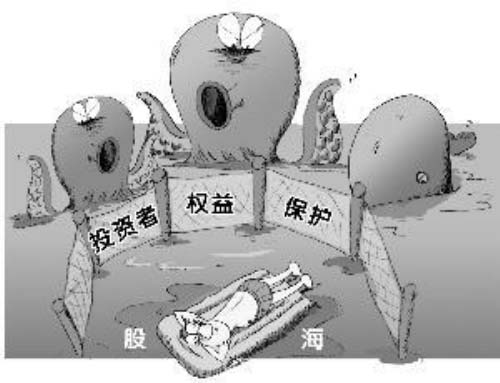
7、 Clarify the exemption situation for independent directors
Article 16 of the new version of "Several Provisions" stipulates:
If an independent director can prove any of the following circumstances, the people's court shall determine that they are not at fault:
(1) Before signing the relevant information disclosure documents, if specific issues that do not belong to one's own professional field have not been discovered with the help of specialized professions such as accounting and law;
(2) Prior to the disclosure or correction date, if false statements are discovered, the issuer shall promptly raise objections and supervise rectification, or report in writing to the securities trading venue or regulatory authorities;
(3) Those who express reservations, objections, or are unable to express their opinions and provide specific reasons regarding false statements in independent opinions, except for those who vote in favor during the review and approval of relevant documents;
(4) Due to the issuer's refusal or obstruction to fulfill its duties, it is unable to make a judgment on whether there are false statements in the relevant information disclosure documents and promptly report in writing to the securities trading venue and regulatory authorities;
(5) Other circumstances that can prove diligence and responsibility.
If an independent director submits evidence to prove that they were able to fulfill their duties in accordance with the requirements of laws, regulations and normative documents formulated by regulatory authorities, and the company's articles of association during their tenure, or if they promptly urged the issuer to rectify after false statements were exposed and the effect was relatively obvious, the people's court may comprehensively judge their fault based on the facts of the case.
In response to the recent wave of "independent director resignations" in the securities market, the new version of the "Several Provisions" also responds to this, clarifying that independent directors can be exempted from liability for false statements made by the above-mentioned companies if they can prove that they have fulfilled their diligent and responsible obligations, in order to avoid the "chilling effect".
-
- What have we all Experienced in 2025
Standing at the intersection of the conclusion of the 14th Five-Year Plan and the start of the 15th Five-Year Plan, 2025 outlines the future with the brush of the rule of law. The Fourth Plenary Session of the 20th Central Committee of the Communist Party of China set the tone for the next five years, the official implementation of the Private Economy Promotion Law has given private enterprises a "reassurance pill", and the Public Security Administration Punishment Law has undergone its first major revision in nearly 20 years.212026-01 -
- Interpretation of the Building Law of the People's Republic of China
Legal Provisions:Article 19: Construction projects shall be awarded through bidding in accordance with law, and direct contracting may be adopted for those not suitable for bidding.312025-03