






Question 1: If a construction contract is determined to be invalid, can the contractor still claim project payment from the employer?
Legal Provisions: Article 24 Where several construction contracts entered into by the parties in respect of the same construction project are all invalid, but the quality of the construction project is up to standard, if one party requests compensation to the contractor by converting the price with reference to the agreement on project price in the actually performed contract, the people's court shall support such request. If it is difficult to determine the actually performed contract, and one party requests compensation to the contractor by converting the price with reference to the agreement on project price in the last signed contract, the people's court shall support such request.
Analysis: The invalidity of a construction contract is not necessarily the contractor's fault; it may also be the employer's responsibility. Moreover, if the project quality is up to standard, the contractor has essentially consumed time, labor and financial resources, and the construction unit has also obtained a usable construction project. Therefore, on the premise that the quality of the construction project is qualified, the contractor may claim project payment from the employer. The amount of project payment shall be determined by compensating the contractor by converting the price with reference to the agreement on project price in the actually performed contract.
Question 2: If the employer uses a project that has not undergone completion acceptance, can it refuse to pay the project payment on the ground that the project has not passed completion acceptance?
Legal Provisions: Article 9 Where the parties dispute over the actual completion date of a construction project, the people's court shall determine it separately in accordance with the following circumstances: (1) If the construction project has passed completion acceptance and is up to standard, the date of completion acceptance and qualification shall be the completion date; (2) If the contractor has submitted a completion acceptance report and the employer delays the acceptance, the date on which the contractor submits the acceptance report shall be the completion date; (3) If the construction project has not undergone completion acceptance but the employer uses it without authorization, the date on which the employer transfers possession of the construction project shall be the completion date.
Analysis: If the employer uses a project that has not undergone completion acceptance, it still needs to pay the project payment. The employer's transfer of possession of the construction project shall be deemed as the employer's recognition of the construction project, so the employer cannot refuse to pay the project payment on the ground that the project has not passed completion acceptance.
Question 3: Is the construction contract signed between the affiliated person and the affiliated entity valid?
Legal Provisions: Article 1 A construction contract shall be determined to be invalid in accordance with the provisions of Article 153, Paragraph 1 of the Civil Code if it falls under any of the following circumstances: (1) The contractor has not obtained the qualification for construction enterprise or exceeds the qualification grade; (2) An actual constructor without qualification borrows the name of a qualified construction enterprise to undertake the project; (3) The construction project must be tendered but has not been tendered, or the winning bid is invalid. A construction contract signed by a contractor with others due to subcontracting or illegal subcontracting of the construction project shall be determined to be invalid in accordance with the provisions of Article 153, Paragraph 1 and Article 791, Paragraphs 2 and 3 of the Civil Code.
Analysis: Invalid. Affiliation refers to the act where a unit or individual without corresponding qualification undertakes a project and actually constructs it by borrowing the name of a qualified construction enterprise. The law strictly prohibits affiliation.
Question 4: If a contractor does not have the qualification for construction enterprise or exceeds the qualification grade when signing the contract, but obtains the corresponding qualification for construction enterprise before completion acceptance, is the construction contract valid?
Legal Provisions: Article 1 (Same as above) Article 4 If a contractor signs a construction contract beyond the business scope permitted by its qualification grade, but obtains the corresponding qualification grade before the completion of the construction project, and a party requests to treat the contract as invalid, the people's court shall not support such request.
Analysis: If the contractor does not have the qualification for construction enterprise when signing the contract, the contract shall be determined to be invalid regardless of whether the qualification is supplemented after the contract is signed. However, if the contractor has the qualification for construction enterprise when signing the contract but only exceeds the grade, the law allows the contractor to make up for it within a certain period of time.
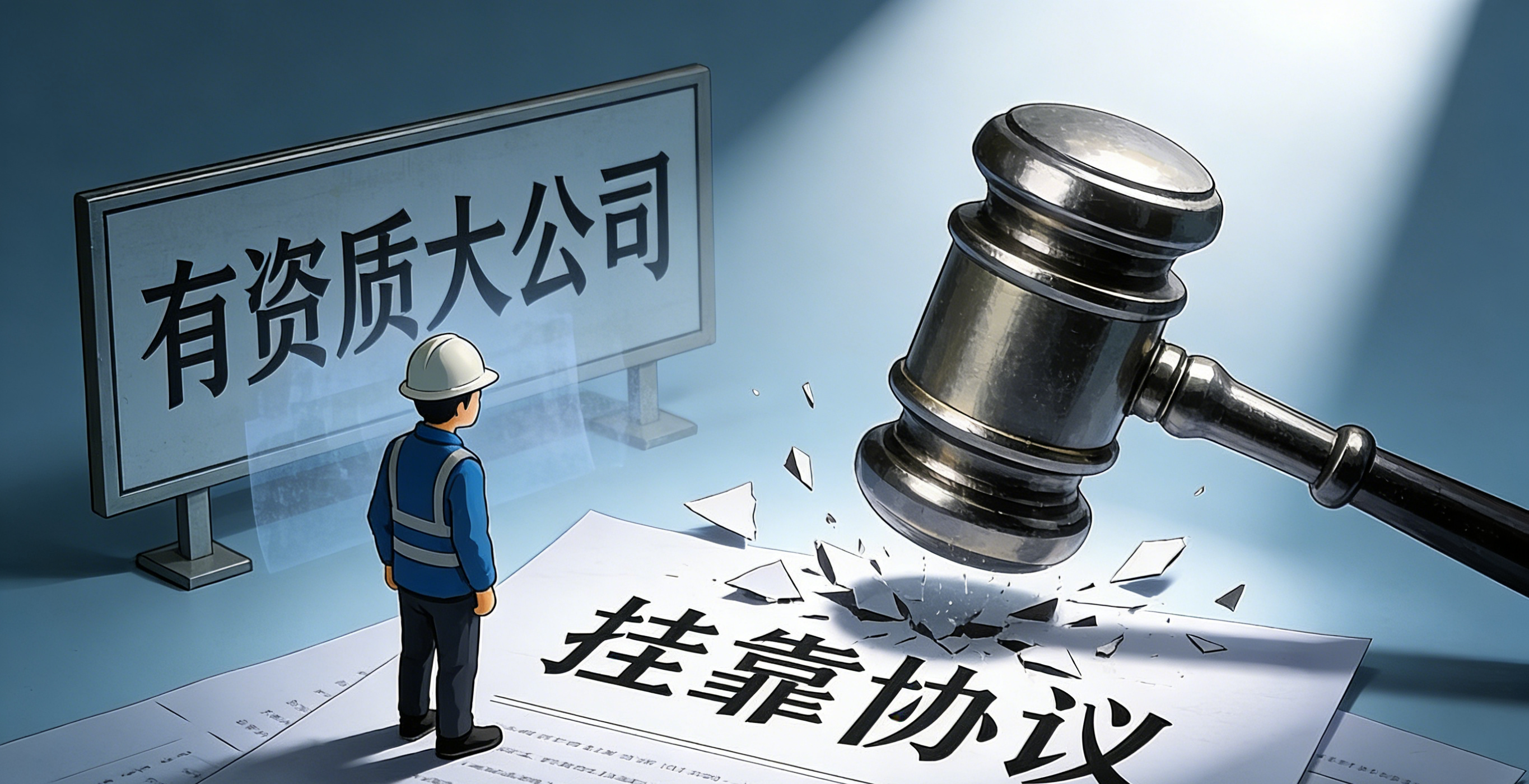
Question 5: After a construction contract is determined to be invalid by the court, how does the court handle a claim for compensation for losses filed by one party against the other? How is the burden of proof allocated between the two parties? How is the amount of losses confirmed?
Legal Provisions: Article 6 Where a construction contract is invalid and one party requests the other party to compensate for losses, it shall bear the burden of proof for the other party's fault, the amount of losses, and the causal relationship between the fault and the losses. If the amount of losses cannot be determined, and one party requests to determine the amount of losses with reference to the agreed quality standards, construction period, time for payment of project price and other contents in the contract, the people's court may make a judgment by taking into account the degree of fault of both parties and the causal relationship between the fault and the losses.
Analysis: When a contract is determined to be invalid, if one party claims compensation for losses from the other party, the following conditions must be met: 1. The loss must be an actual loss incurred due to reliance on the validity of the contract, i.e., the loss of reliance interest, excluding the loss of expected attainable interest; 2. Fault: The other party shall bear corresponding civil liability only if it is at fault. When determining the liability for compensation for losses, fault shall be identified according to the specific reasons for the invalidity of the construction contract; 3. Causal relationship; 4. Burden of proof: The party claiming losses shall bear the burden of proof for the other party's fault, the amount of losses, and the causal relationship between the fault and the losses. Scope of the employer's claim for compensation for losses from the contractor due to contract invalidity: 1. Actually incurred expenses; 2. Claim for construction period delay; 3. Losses caused by project quality; 4. Other personal and property losses. Scope of the contractor's claim for compensation for losses from the employer due to contract invalidity: 1. Loss of actual expenditure; 2. Losses from work suspension and idleness.
Question 6: If a construction contract has agreed on a fixed price for the project, can one party apply for an appraisal of the project cost?
Legal Provisions: Article 28 Where the parties agree to settle the project price at a fixed price, if one party requests an appraisal of the construction project cost, the people's court shall not support such request.
Analysis: During the performance of a construction contract, if there is no change in the project quantity, the settlement shall be made in accordance with the lump-sum total price agreed in the contract. If one party requests an appraisal of the project cost and settlement, regardless of the reasons, it shall not be supported. In case of changes in the project price due to design changes and other reasons, when the part agreed in the contract can be clearly distinguished from the part with design changes, it shall not lead to a re-appraisal of the entire project cost. In accordance with the principle of fairness, the project price for the changed part shall be calculated only in accordance with the settlement method and standards agreed in the contract.
Question 7: Does jointly entrusting the issuance of a project cost consulting opinion before litigation mean accepting the opinion? Can one party apply for a re-appraisal in litigation?
Legal Provisions: Article 30 Where the parties jointly entrust relevant institutions or personnel to issue a consulting opinion on the construction project cost before litigation, and one party does not recognize the consulting opinion and applies for an appraisal in litigation, the people's court shall permit such application, unless both parties clearly indicate that they are bound by the consulting opinion.
Analysis: If one party does not recognize the consulting opinion issued by the appraisal institution selected unilaterally before litigation and applies for a re-appraisal, the court shall permit it. Note: Unless both parties clearly indicate that they are bound by the consulting opinion.
Question 8: If there are quality problems with the project and the employer does not require the contractor to repair it, can the employer reduce the payment of the project price?
Legal Provisions: Article 12 If the quality of the construction project does not meet the agreement due to the contractor's reasons, and the contractor refuses to repair, rework or reconstruct, if the employer requests to reduce the payment of the project price, the people's court shall support such request.
Analysis: When there are defects in the project quality, the employer shall first require the contractor to assume the repair liability. If the employer determines that the project quality does not meet the standards, it shall first order the contractor to rectify. If the contractor refuses to repair or the quality still does not meet the standards after repair, the employer has the right to deduct or refuse to pay the project price accordingly. If the employer does not require repair, the claim for reducing the price shall not be supported. A counterclaim or a separate lawsuit may be filed to deduct the project price.
Question 9: If the employer has put the project into use before completion acceptance, can it claim rights against the contractor on the ground that the quality of the used part of the project does not meet the contractual agreement?
Legal Provisions: Article 14 If a construction project has not undergone completion acceptance and the employer uses it without authorization, and then claims rights on the ground that the quality of the used part does not meet the agreement, the people's court shall not support such claim; however, the contractor shall bear civil liability for the quality of the foundation and main structure of the construction project within the reasonable service life of the construction project.
Analysis: First of all, a construction project that has not passed completion acceptance and qualification shall not be delivered for use. The employer's use of the construction project for operational needs is deemed as unauthorized use. Secondly, the employer shall not claim rights on the ground that the project quality does not meet the agreement for the part of the construction project it has used without authorization, but may still claim rights for the unused part of the construction project. Thirdly, the employer's unauthorized use only has the legal effect of presuming the project quality is qualified. If quality problems of the project were found before the employer's unauthorized use and the employer has required the contractor to repair, but the contractor refused to repair, the employer may still claim rights against the contractor after use. Fourthly, if there are quality problems with the foundation and main structure of the construction project, the contractor shall bear civil liability within the reasonable service life of the construction project, regardless of whether the construction project has undergone completion acceptance or whether the employer has used it without authorization.
Question 10: Can the visa slips formed during the construction process be used as the basis for confirming the project quantity?
-
- What have we all Experienced in 2025
Standing at the intersection of the conclusion of the 14th Five-Year Plan and the start of the 15th Five-Year Plan, 2025 outlines the future with the brush of the rule of law. The Fourth Plenary Session of the 20th Central Committee of the Communist Party of China set the tone for the next five years, the official implementation of the Private Economy Promotion Law has given private enterprises a "reassurance pill", and the Public Security Administration Punishment Law has undergone its first major revision in nearly 20 years.212026-01 -
- Interpretation of the Building Law of the People's Republic of China
Legal Provisions:Article 19: Construction projects shall be awarded through bidding in accordance with law, and direct contracting may be adopted for those not suitable for bidding.312025-03