






In enterprise human resource management, terminating labor contracts when employee performance does not meet standards is a common way to optimize personnel structure. However, the number of labor disputes caused by this remains high, and the failure rate of employers is astonishing. The case concluded by the People's Court of Songjiang District, Shanghai in 2024 clearly reveals the common loopholes in both the physical and procedural aspects of companies when dismissing underperforming employees.

1、 Core case: Dismissal that was "institutionalized" but "illegal"
An employee's labor contract was directly terminated by the company based on the internal "Performance Evaluation Plan" due to their performance evaluation scores being far below the company's standards for three consecutive months. This process seems to be well founded and the process is clear. But the court's ruling points to the opposite result: the company constitutes an illegal termination and needs to pay a compensation of 36101 yuan.
The court explicitly stated that employee performance failure corresponds to "incompetence" at the legal level. For dismissal in such situations, Article 40 of the Labor Contract Law establishes a mandatory pre procedure - employees must first receive training or be transferred. The company's use of internal systems to "bypass" this legal procedure essentially excludes legal obligations through internal regulations, and the dismissal behavior is therefore deemed illegal.
In addition, employees raised objections to the performance evaluation results during the trial, stating that "the performance evaluation goals are unreasonable and basically impossible to achieve". Although this defense did not become the main basis for the judgment, it pointed out a hidden danger that companies are prone to overlook: if performance goals are questioned and divorced from reality, or if the assessment process lacks objective records and communication traces, then the legal basis for the conclusion of "unqualified performance" will be shaken. Once performance evaluation is recognized as a subjective judgment of the manager, its probative value as a basis for dismissal will be greatly reduced in judicial review.
2、 Analysis of the reasons for the employer's defeat in the lawsuit
The reason why companies have repeatedly lost contracts due to unsatisfactory performance is rooted in their misunderstanding and oversight of legal provisions, mainly reflected in the following aspects:
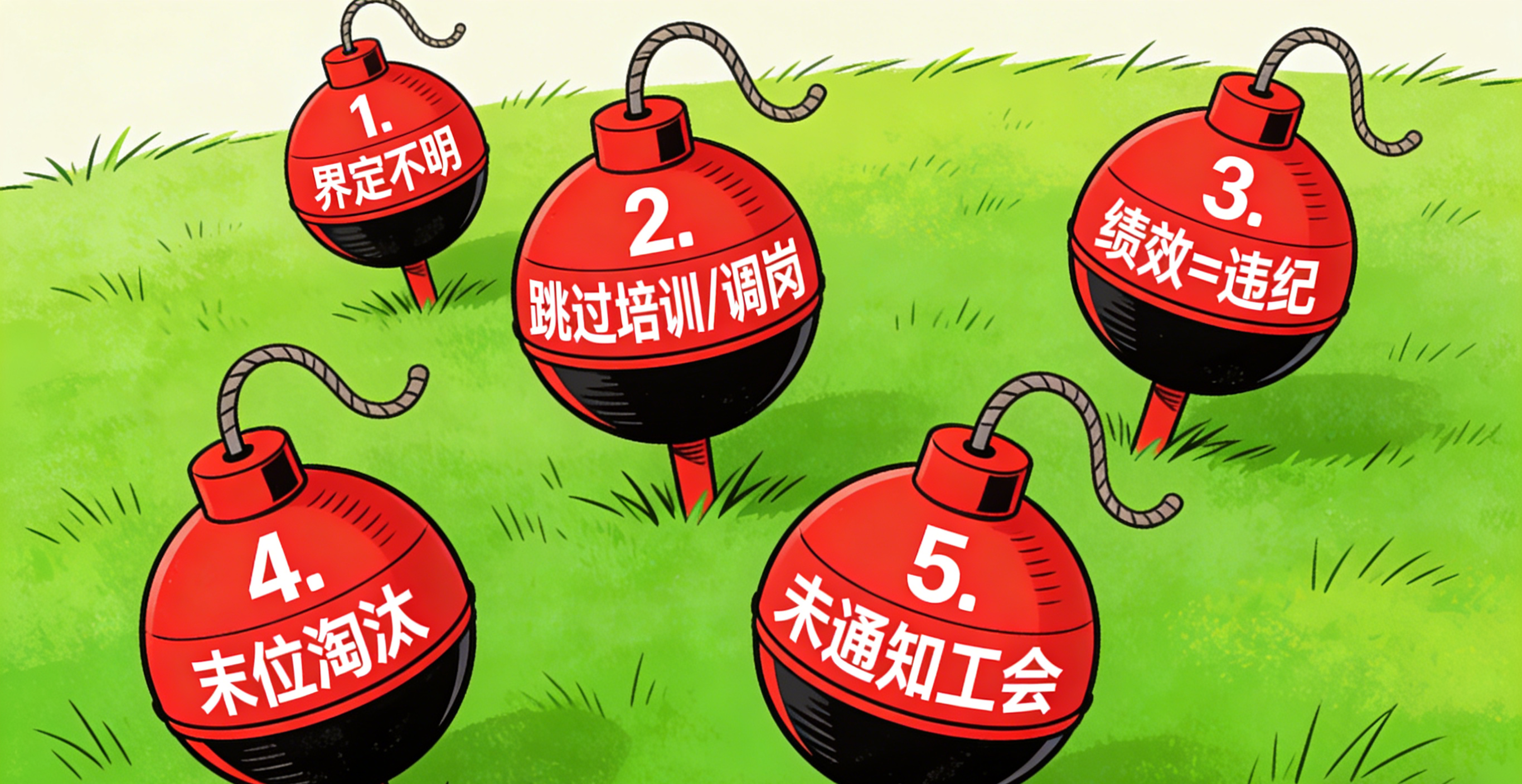
Firstly, the definition of 'unsatisfactory performance' is unclear. Many companies have not provided clear, reasonable, and measurable definitions of 'incompetence' through labor contracts or legal and effective rules and regulations. In arbitration or litigation, if a company cannot provide specific standards or factual evidence to support its conclusions, it will naturally lose the case due to "inability to provide evidence".
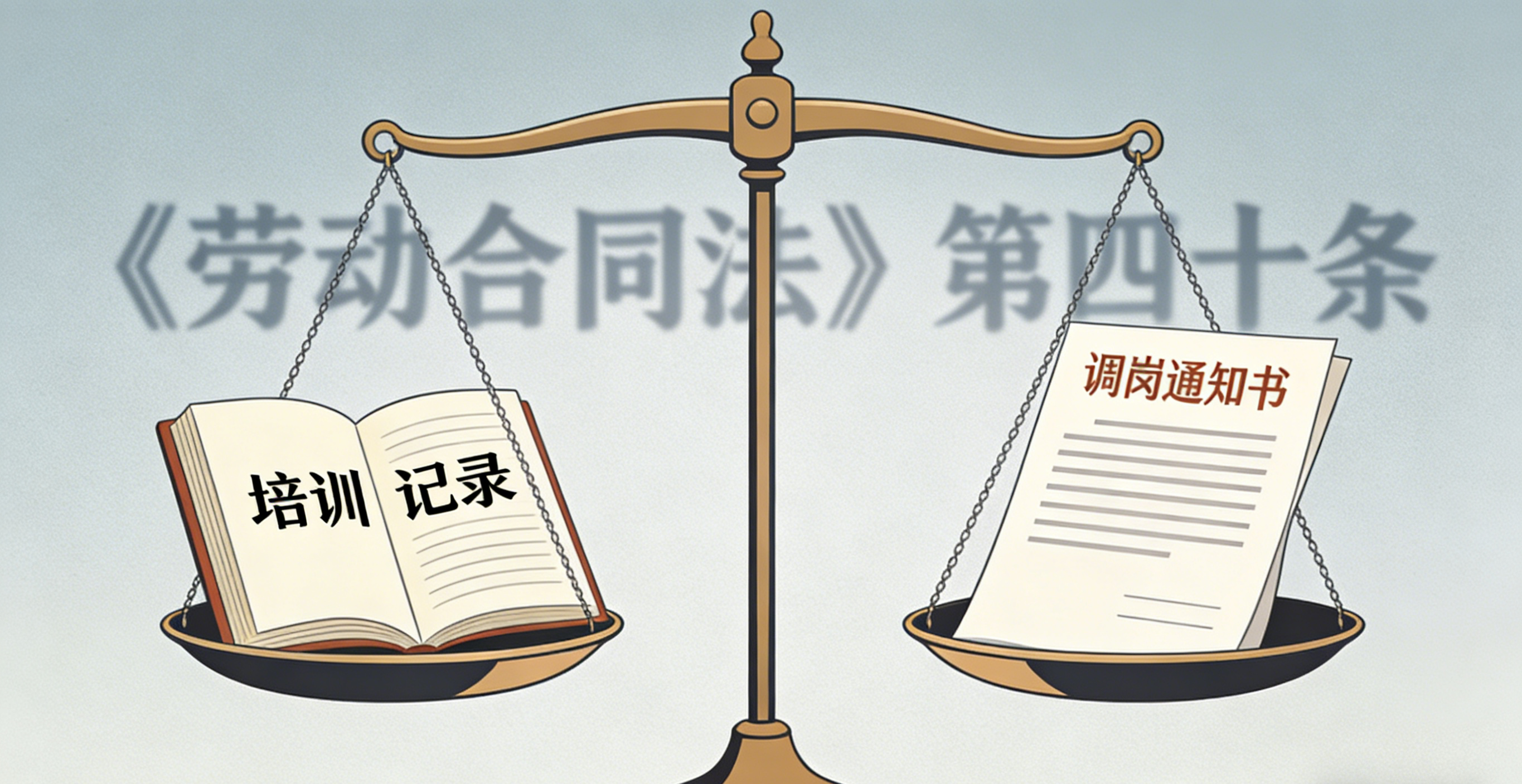
Secondly, failure to fulfill training or job transfer obligations. According to Article 40 of the Labor Contract Law, if an employee is unable to perform the job and still cannot perform the job after training or adjustment of the job position, the employer may terminate the contract. But in practice, many companies skip this legal step directly before making a termination decision.
Thirdly, incorrectly defining unsatisfactory performance as' violating rules and regulations'. For example, some systems stipulate that 'failing performance evaluations twice in a row is considered a serious violation of rules and regulations'. However, unsatisfactory performance is often caused by insufficient ability, rather than subjective fault or intentional failure to fulfill job responsibilities. Treating it as a violation of discipline lacks legal basis, and dismissal on this basis will naturally be considered illegal.
Fourthly, implement the "last place elimination" system. Special reminder: Being at the bottom of an employee's assessment does not necessarily mean they are not competent in their job. The minutes of the relevant meeting of the Supreme People's Court clearly state that unilaterally terminating a labor contract through forms such as "last place elimination" will constitute illegal termination.
Fifth, failure to follow legal procedures such as notifying the trade union. Article 43 of the Labor Contract Law stipulates that if an employer unilaterally terminates a labor contract, it shall notify the labor union of the reasons in advance. If an employee terminates the contract due to incompetence but fails to follow this procedure, they also face the risk of being deemed to have illegally terminated the contract.
3、 How should enterprises restructure performance management
Modern enterprises must establish a dynamic performance system for whole process management, shifting from pursuing "correct results" to ensuring "legal processes". Specifically, the following path can be followed:
Firstly, institutional design must balance legality and rationality. The enterprise system must comply with the provisions of the Labor Contract Law and actively clean up illegal clauses such as "dismissal for unsatisfactory performance". At the same time, performance evaluation standards should have objectivity and accessibility, and setting unrealistic "high indicators" cannot obtain legal support in case of disputes.
Secondly, the management process should pay attention to leaving traces. Written records should be kept for all stages from goal setting, regular feedback to result evaluation. These continuously accumulated materials can objectively reflect the specific fact that employees are "incompetent", and also demonstrate that the company has fulfilled its management guidance responsibilities, rather than making termination decisions based solely on the final results.
Once again, the legal prerequisite procedures must be followed before making the decision to dismiss. When an employee is confirmed to have unsatisfactory performance, the company cannot directly terminate the contract. Statutory training or job transfer is an obligation that must be fulfilled before termination. Training should be targeted at areas of weakness, job transfers should be reasonable, and all communication records, training materials, and subsequent evaluation results should be properly preserved to demonstrate that the company has fulfilled its core steps in accordance with the law.
Finally, the termination operation must be rigorous. The termination procedure can only be initiated after all the aforementioned steps have been completed and it has been confirmed that the employee is still not competent. The termination notice must closely adhere to the statutory reason of "still unable to perform duties after training or job transfer", clearly state the facts, and ensure that it is delivered in accordance with the law and the notification union and other procedures are followed to avoid illegal termination due to procedural defects.
Conclusion
The reason why dismissing employees on the grounds of poor performance has become a "high-risk area" for labor disputes is that many companies mistakenly equate management power with unconstrained disciplinary power, ignoring the legal protection of workers' rights and their own legal obligations. For enterprises, the core purpose of performance management is not to "eliminate employees", but to enhance employee capabilities and optimize organizational efficiency through scientific management. This is not only a defensive strategy to deal with labor disputes, but also an inevitable choice for enterprises to move towards refined and humanized management.
-
- Studying 627 Labor Dispute Cases, I Found the Three Most Dangerous Employment Methods for Enterprises
Many bosses think: Labor disputes occur by chance. But when I systematically studied 627 labor dispute cases (second-instance judgments), I found a very cruel fact:The vast majority of companies lose lawsuits not because the law is complicated, but because they have used some high-risk employment methods for a long time.162026-03 -
- Enterprise Probationary Compliance Employment Guidebook Manual
The probationary period is a key inspection period in the initial stage of labor relations, and its legal regulation not only gives enterprises the right to inspect the suitability of employees, but also sets strict boundary requirements.102026-02