






The probationary period is a key inspection period in the initial stage of labor relations, and its legal regulation not only gives enterprises the right to inspect the suitability of employees, but also sets strict boundary requirements. In practice, labor disputes caused by improper operation of the probationary period mostly stem from the company's vague understanding of legal procedures or omissions in implementation. This paper systematically sorts out the compliance points of probationary employment from the three dimensions of system norms, process control, and evidence retention, and provides enterprises with practical operational guidance.
1. Signing specifications: the written contract is preceded by the core clauses
The signing of the labor contract is the basis for the management of the probationary period. According to the Labor Contract Law, the employer shall sign a written labor contract with the employee within one month from the date of employment, and the probationary period shall be included in the contract period, and the probationary period contract shall not be agreed separately
The contract text should specify the following core elements: the specific length of the probationary period, the salary standard during the probationary period, the salary standard after regularization, the job position and responsibilities, employment conditions and assessment standards, social insurance payment, etc. After the contract is signed and sealed by both parties, the employer and the employee each hold a copy. The core of this link is to write and clarify rights and obligations to avoid disputes caused by oral agreements.
2. Time limit: The legal upper limit cannot be exceeded
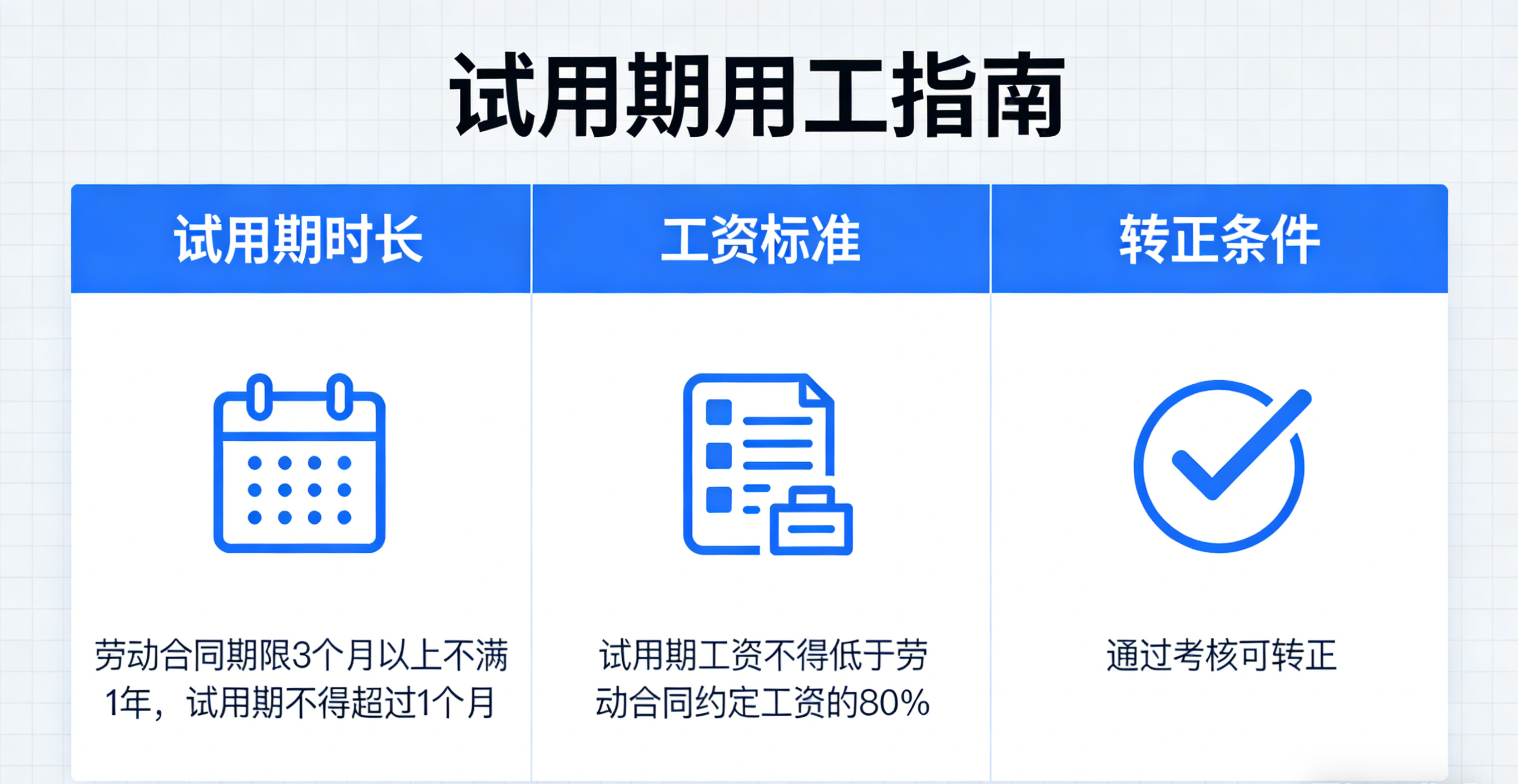
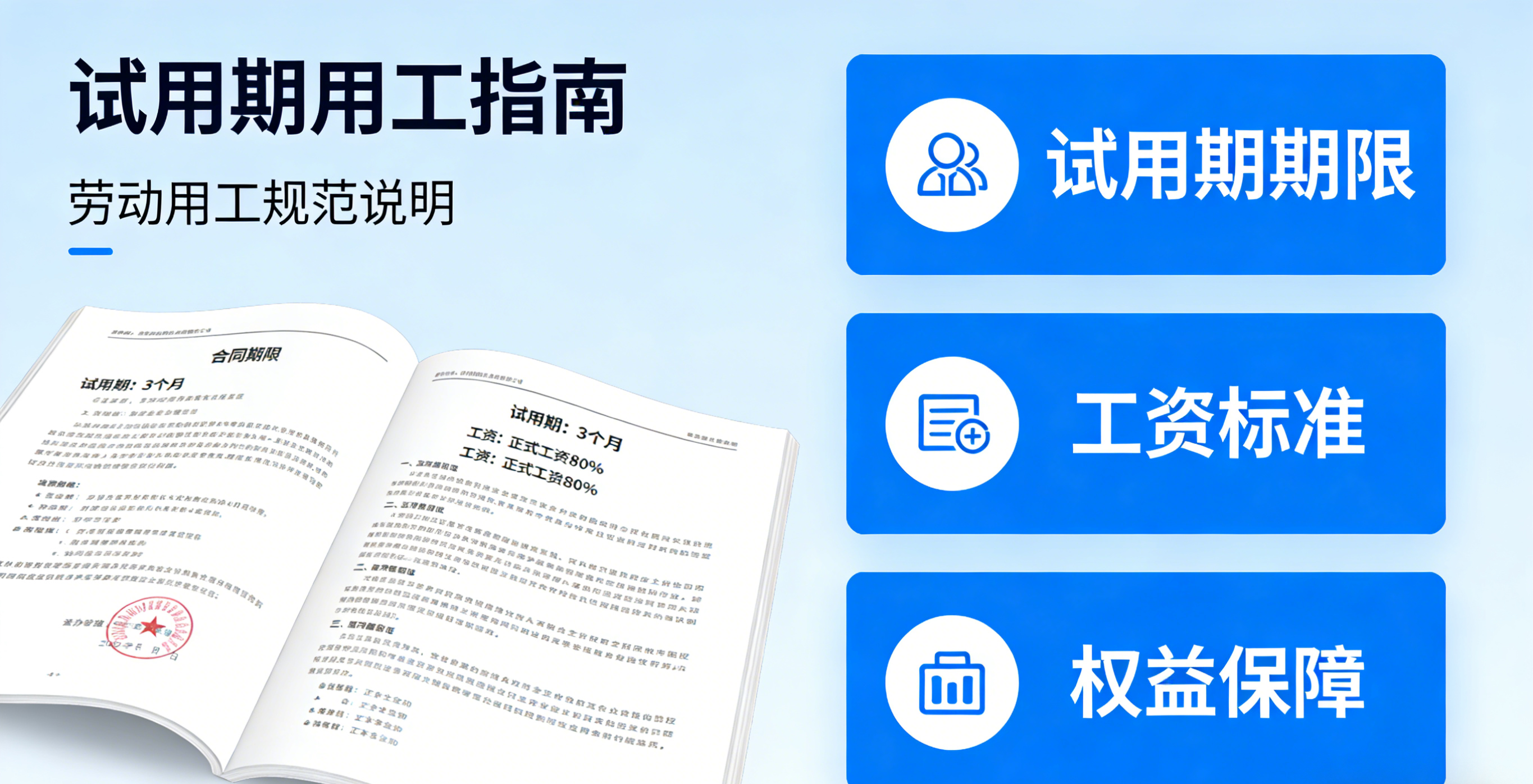
There is a statutory correspondence between the length of the probationary period and the term of the labor contract. Specifically:
-
If the labor contract period is more than three months but less than one year, the probationary period shall not exceed one month; -
if it is more than one year but less than three years, the probationary period shall not exceed two months; -
For fixed-term and indefinite labor contracts of more than three years, the probationary period shall not exceed six months
Employers should set probationary periods in strict accordance with this standard and shall not exceed the legal upper limit.
If it is really necessary to extend the inspection cycle, a supplementary agreement can be negotiated with the employee. However, it should be noted that the supplementary agreement can only increase the assessment dimension or refine the inspection objectives, and shall not change the core clauses such as the length of the probationary period and salary standards, and must be signed and confirmed by both parties, and have the same effect as the original contract.
3. Treatment guarantee: pay wages and social security compliantly
The salary during the probationary period shall meet the double minimum requirements: it shall not be less than 80% of the minimum salary of the same position in the unit, nor shall it be less than 80% of the salary agreed in the labor contract, and shall not be lower than the minimum wage standard of the employer's location. Wages shall be paid in full on a monthly basis and shall not be arrears or deductions
In terms of social security payment, the employer should register the employee for social insurance and pay on time within 30 days from the date of employment. In practice, some enterprises require employees to sign a "voluntary waiver of social security agreement", which is invalid due to violation of mandatory legal provisions. If the employee refuses to cooperate with the payment of social security, the enterprise should first remind the employee in writing and keep evidence
4. Employment conditions: written confirmation and assessment traces
The clarification of employment conditions is the core link of probationary period management. Enterprises should inform employees of the employment conditions in writing before joining the company, including job skill requirements, performance appraisal indicators, professional quality standards, etc., and the employees should sign the "Confirmation of Employment Conditions" for retention
During the probationary period, a regular assessment mechanism should be established to form an objective assessment record. The assessment materials can include work results summary, attendance records, skill test reports, supervisor evaluation opinions, etc., such as the "Probationary Monthly Appraisal Form", "Probationary Comprehensive Appraisal Form", etc., and the appraisal results should be signed and confirmed by the employee. The core of this link is to transform subjective judgments into objective evidence and provide a basis for subsequent management decisions
5. Property guarantee: system management instead of fees
Employers shall not collect deposits or security deposits from employees in any form, nor shall they seize personal documents such as ID cards and academic certificates. Such behavior violates Article 9 of the Labor Contract Law and will face administrative penalties.
If it is really necessary to prevent the risk of property loss of the company, it can be achieved by improving the internal management system, such as establishing a registration system for equipment collection, signing confidentiality agreements, standardizing work processes, etc., instead of requiring employees to provide property guarantees.
6. Overtime management: consensus and full payment
The working hours of employees during the probationary period should be reasonably arranged. If it is really necessary to work overtime, it should be agreed with the employee and make overtime records, including the "Overtime Application Form", "Overtime Attendance Record Form", etc., which shall be signed and confirmed by the employee.
The calculation of overtime pay shall be based on the actual salary of the employee and shall be implemented in accordance with the legal standards. if you work overtime on rest days, you can give priority to arranging compensatory leave; If the working hours are extended on weekdays and overtime is worked on statutory holidays, overtime pay must be paid in full. The compliance of overtime management involves not only the payment of labor remuneration, but also the protection of employees' right to rest.
7. System construction: complete rules and regulations and notifications in place
Enterprises should formulate internal rules and regulations such as the "Measures for the Management of Probationary Period" and the "Performance Appraisal System", and publicize them after discussion and approval by the employee congress or all employees to ensure the legality and effectiveness of the system.
When new employees join the company, they should organize the study of the company's rules and regulations and probationary assessment standards, make training records and have them signed and confirmed by the employees. This link can avoid disputes caused by "employee ignorance" and also provide an institutional basis for subsequent management sanctions.
8. Dismissal handling: legal circumstances and evidence support
Dismissal of employees during the probationary period must meet the statutory circumstances, including "not meeting the employment conditions" and "serious violations of rules and regulations", and must be supported by sufficient and objective evidence. Employers should avoid arbitrary dismissal based solely on subjective judgment.
If an employee resigns due to personal reasons, he or she shall be required to submit a written resignation report three days in advance, settle his salary and go through the social security transfer procedures in accordance with the law after the work handover. The entire resignation process should be standardized and orderly to avoid disputes caused by procedural flaws.
Epilogue
The probationary period is not a "place outside the law" of enterprises, nor is it a "vacuum period" for workers. The regulation of the probationary period in the Labor Contract Law not only protects the legitimate rights and interests of workers, but also delineates clear employment boundaries for enterprises. For enterprises, probationary compliance is not only a basic requirement for avoiding legal risks, but also an important foundation for attracting and retaining talents. An irregular employment operation may bring several times the economic compensation and irreparable brand reputation loss. Compliance is the cornerstone of the long-term development of enterprises. Only on the basis of clear employment conditions, fair assessment standards, and standardized employment processes can we achieve a two-way win-win situation for enterprises and workers.
-
- Studying 627 Labor Dispute Cases, I Found the Three Most Dangerous Employment Methods for Enterprises
Many bosses think: Labor disputes occur by chance. But when I systematically studied 627 labor dispute cases (second-instance judgments), I found a very cruel fact:The vast majority of companies lose lawsuits not because the law is complicated, but because they have used some high-risk employment methods for a long time.162026-03 -
- Enterprise Probationary Compliance Employment Guidebook Manual
The probationary period is a key inspection period in the initial stage of labor relations, and its legal regulation not only gives enterprises the right to inspect the suitability of employees, but also sets strict boundary requirements.102026-02