






Dismissing employees who "don't work" is often "easy to think about, but difficult to do" in enterprise management. On the surface, employees commute to and from work on time and have no obvious disciplinary violations, but such people are often the most difficult to deal with. Once an enterprise decides to unilaterally terminate the labor contract, it is easy to fall into legal disputes and even lose the lawsuit for compensation.

1. The root cause of the dilemma: the triple contradiction between legal restrictions and practical operations
In practice, this "difficulty" is mainly reflected in three aspects:
(1) The law has strict restrictions on the employer's right to terminate
China's Labor Contract Law takes the protection of workers' rights and interests as the basic orientation and sets strict conditions for unilateral termination of contracts by employers. It is difficult for enterprises to directly correspond to specific reasons for termination in law. As long as employees attend on time and complete basic actions, they are easily identified as "fulfilling their labor obligations", and their work quality or initiative problems are often difficult to quantify and prove.
(2) The threshold for key release paths is high
The most common legal basis for dealing with such employees is Article 40 of the Labor Contract Law - "incompetent for work". However, to apply this article, the enterprise needs to bear a heavier burden of proof:
-
There must be clear and quantifiable job responsibilities and assessment standards; -
There must be objective evidence to prove that employees have not met the standards, such as performance appraisal results, work records, etc.; -
They must also perform the pre-procedures of "training or transfer" and cannot be directly dismissed.
In practice, many enterprises lack clear job descriptions and scientific assessment systems, resulting in a lack of basis for termination behavior and being recognized as illegal termination.
In addition, if you try to dismiss on the grounds of "serious disciplinary violation", the threshold is higher. Simple inefficiency and poor initiative are usually difficult to identify as "serious" violations of discipline, unless they are clearly defined in the rules and regulations of the enterprise and the employee's behavior does reach the corresponding level.
(3) Procedural flaws can easily lead to losing the whole game
Even if the substantive reasons are established, if the termination procedure is illegal, such as failure to notify the trade union or improper expression of the reason for termination, the entire termination may still be judged to be illegal. Not only do companies need to pay double compensation, but they may also face double damage to reputation and management authority.
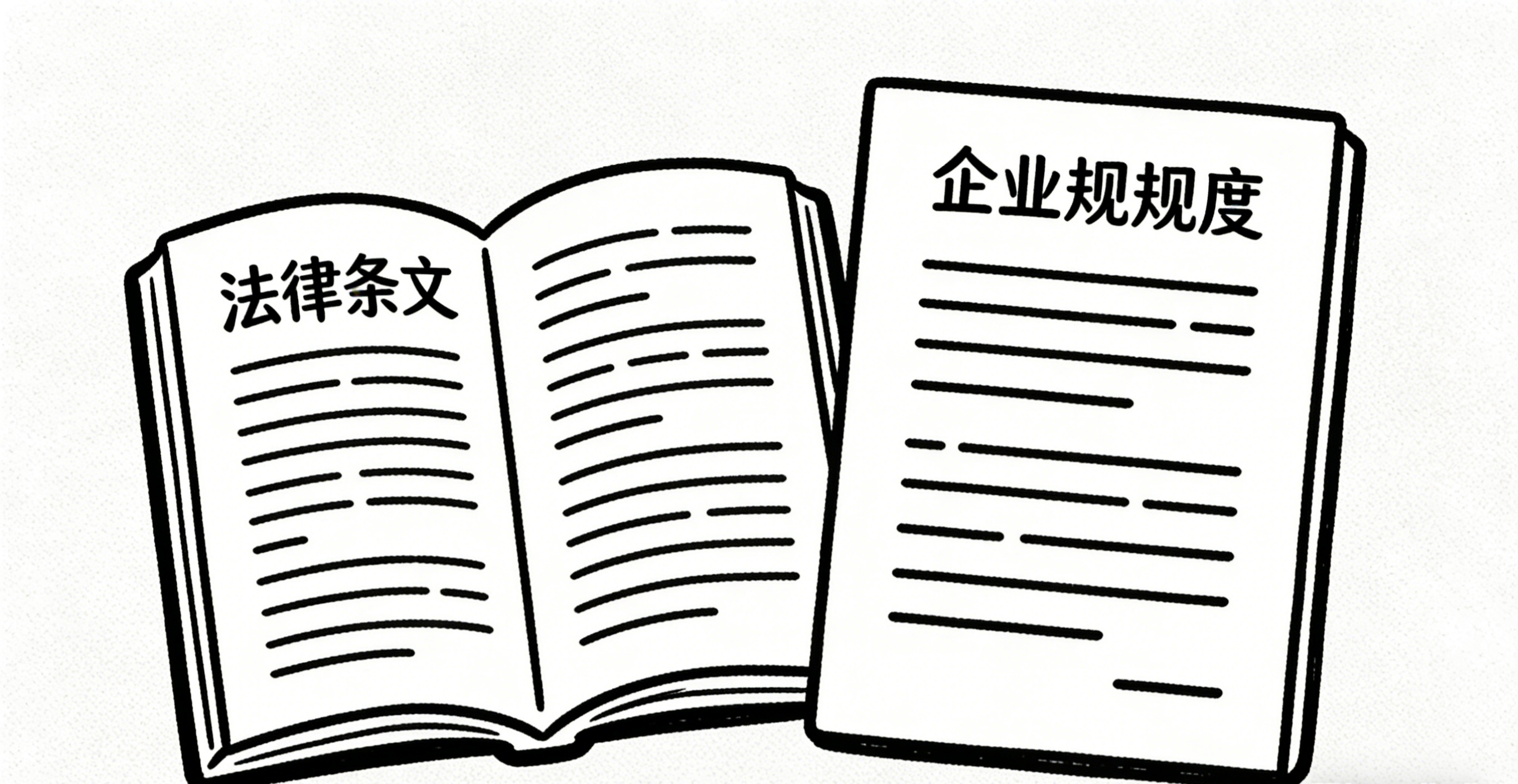
2. Compliance path: build a systematic management mechanism
Therefore, to deal with "non-working" employees, we cannot rely on impromptu ideas, but should establish a systematic management mechanism:
(1) Consolidate basic management
-
Formulate a clear job description to clarify the core responsibilities, work standards and output requirements of each position; -
Establish an objective performance appraisal system and use quantifiable tools such as key performance indicators (KPIs) and objective management (MBO). -
improve rules and regulations through democratic procedures, and transform behaviors such as "passive negligence" and "shirk of responsibility" into specific provisions that can be defined and recognized; -
Ensure that rules and regulations are subject to democratic procedures and public notice to ensure they have legal effect.
(2) Pay attention to daily traces
-
The issuance and feedback of work tasks should be retained in writing by email, office system and other written means as much as possible; -
Conduct regular performance interviews to record the problems and improvement requirements of employees, form written records and be signed and confirmed by employees; -
Objectively record the work process, such as work logs, task completion statistics, etc.; -
Communicate and warn abnormal performances in a timely manner, give opportunities for improvement and fix evidence.
(3) Adopt compliance processes
It is recommended to adopt a three-step strategy of "performance improvement plan - training or transfer - still incompetent and then released":
Step 1: Performance Improvement Plan
-
Develop performance improvement plans with employees, clarifying improvement goals, timelines, support measures, and evaluation criteria. -
The duration of the program is usually 1-3 months, during which regular feedback and guidance are given; -
Keep complete planning documents and process records.
Step 2: Training or transfer
-
If the improvement plan fails to meet the standards, the statutory pre-procedures should be performed: arrange targeted training or adjust to suitable positions; -
The training should have clear content, attendance records and effect evaluation; -
The transfer should follow the principle of reasonableness, and the new position should match the ability of employees.
Step 3: Still incompetent and then lifted
-
After training or transfer, the employee is still not competent for the job before the dismissal procedure can be initiated. -
Before termination, the trade union should be notified in accordance with the law and the opinions of the trade union should be heard; -
The notice of termination shall accurately state the reasons for termination and attach relevant evidence.
Each step is both a means of management and a process of fulfilling legal obligations and fixing evidence.
3. Rational choice: consideration of alternatives
Enterprises also need to be soberly aware that even if the process is complete, there is still a risk of losing in labor disputes. Therefore, in some cases, alternatives such as negotiated termination and non-renewal of the contract may be safer than forced unilateral termination, which can not only control costs, but also avoid long-term legal disputes.
Alternative comparison
| Scheme | Applicable cases | Advantages: | Disadvantages |
|---|---|---|---|
| Unilateral Termination (Incompetent) | The system is sound and the evidence is sufficient | Demonstrate management authority | High legal risks and complex procedures |
| Negotiated dissolution | Employees are willing to cooperate | Risks are controllable and quickly resolved | Financial compensation is required |
| The contract will not be renewed upon expiration | Fixed-term contracts are about to expire | The procedure is simple and the legal risk is low | Limited scope of application |
| Persuade retirement/negotiate transfer | Employees are willing to improve | Retain talent and avoid conflict | It doesn't necessarily solve the problem |
4. Conclusion: From case response to sublimation of system construction
In general, the difficulty of dismissing "non-working" employees reflects the necessity of refined and standardized enterprise management. Instead of passively responding to individual cases, it is better to start from the institutional level and establish a management system that can identify problems, retain evidence, and deal with them legally, which can not only deal with individual employee problems, but also help improve the overall effectiveness of the team.
Today, with the increasing improvement of labor laws, the role of enterprise managers is changing from "giving orders" to "executing the system". Only by embedding daily management into the orbit of the law can we have both justification and no worries when it is necessary to take drastic measures.
-
- Studying 627 Labor Dispute Cases, I Found the Three Most Dangerous Employment Methods for Enterprises
Many bosses think: Labor disputes occur by chance. But when I systematically studied 627 labor dispute cases (second-instance judgments), I found a very cruel fact:The vast majority of companies lose lawsuits not because the law is complicated, but because they have used some high-risk employment methods for a long time.162026-03 -
- Enterprise Probationary Compliance Employment Guidebook Manual
The probationary period is a key inspection period in the initial stage of labor relations, and its legal regulation not only gives enterprises the right to inspect the suitability of employees, but also sets strict boundary requirements.102026-02