






Fight for Survival: The Do-or-Die Countdown of a Trading Enterprise
In 2022, a trading enterprise mainly engaged in the wholesale of household goods was on the brink of collapse. This regional brand with 8 offline stores in the province suffered a series of heavy blows due to recurring COVID-19 outbreaks: plummeting offline foot traffic led to zero store revenue, supply chain disruptions caused inventory backlogs worth tens of millions of yuan, and the capital chain completely broke down.
When the crisis fully erupted, the enterprise had accumulated unpaid wages of 1.8 million yuan to 127 employees and over 30 million yuan in payment arrears to 56 suppliers. After some suppliers applied for property preservation, the enterprise's accounts were frozen, and its operations came to a complete standstill. It seemed that there was only one way forward: enter bankruptcy liquidation, cancel the enterprise, lay off employees, and let creditors receive meager residual value proportionally.
Appointed in Crisis: Serving as the Administrator to Explore the Road to Rebirth
Appointed by the court, the bankruptcy reorganization team of our law firm officially took on the role of the enterprise's administrator. Faced with the chaotic situation of frozen accounts, scattered employees, and besieging suppliers, the team quickly stationed itself in the enterprise and launched a comprehensive due diligence investigation. During the investigation, a glimmer of hope was found: the enterprise's e-commerce business had quietly accumulated 50,000 online members during the pandemic, with stable monthly revenue of over 2 million yuan.
This meant that the enterprise was not completely valueless; it was like "the body is dead, but the heart still beats". A bold idea was thus born: divest loss-making assets, preserve core businesses, introduce strategic investment, and let the enterprise be reborn with its valuable parts.
Innovative Design: "Asset Divestiture + Business Rebirth" Dual-Track Approach
Based on the above judgment, the team creatively designed a dual-track reorganization plan, splitting the enterprise into "past" and "future" parts for separate handling:
Track 1: Divest Loss-Making Assets and Settle Priority Debts
The assets of 8 continuously loss-making offline stores were packaged for public auction. The proceeds from the auction, under the supervision of the administrator, were prioritized to settle employee claims, ensuring the basic rights and interests of 127 employees were protected to the greatest extent possible.
Track 2: Preserve Core Business and Introduce Strategic Investment
The e-commerce business with 50,000 members and monthly revenue exceeding 2 million yuan was retained as the core high-quality asset. The team successfully introduced a new retail enterprise as a strategic investor, which injected 15 million yuan:
-
8 million yuan: Supplement operating capital and restart the procurement and logistics systems -
7 million yuan: Used to settle debts and provide financial support for the reorganization plan
The new investor also made a key commitment: no layoffs within three years, maintain the original e-commerce team structure, and ensure the stability of the core team.
Precise Debt Settlement: Differentiated Arrangements for Employee and General Creditors
In designing the debt settlement plan, the team fully considered the interests and demands of different creditors as well as the enterprise's actual payment capacity:
Employee Claims: Innovative "Cash + Consumption Vouchers" Combination
For the 1.8 million yuan in unpaid wages owed to 127 employees, a combined settlement method was adopted:
-
60% in cash: Each employee receives 60% of their unpaid wages in cash to ensure basic living needs -
40% in consumption vouchers: The remaining amount is issued in the form of consumption vouchers on the enterprise's e-commerce platform, with no usage thresholds, which can be used to purchase household goods
This design not only alleviated the enterprise's cash pressure but also converted employees into platform consumers, achieving mutual empowerment.
General Claims: Instalment Payment to Improve Recovery Rate
For the over 30 million yuan in payment arrears to 56 suppliers, a 35% payment ratio was implemented in instalments:
-
First instalment: 20%: Paid within 6 months after the implementation of the reorganization plan -
Second instalment: 15%: Fully paid within 12 months
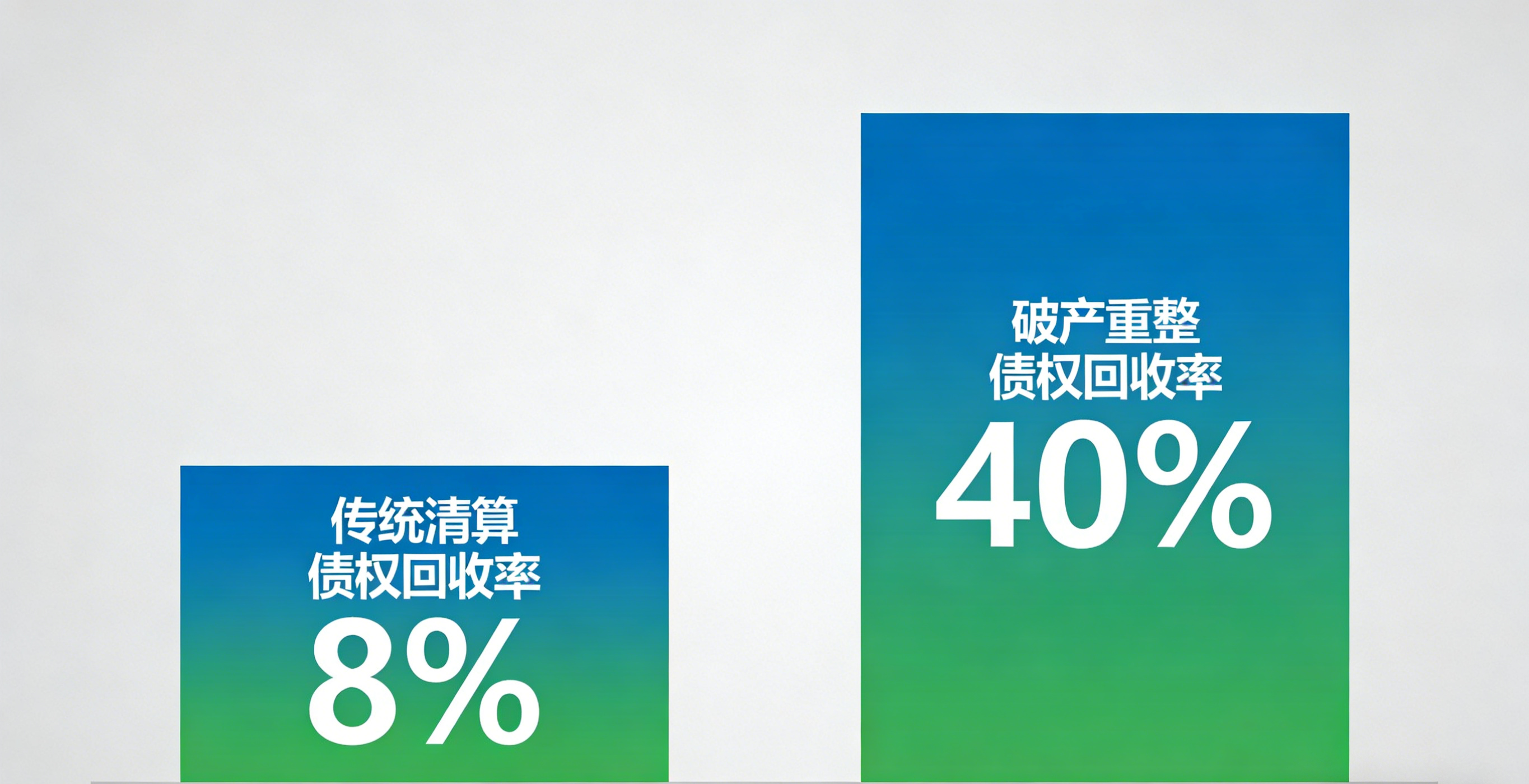
This settlement ratio increased the expected recovery rate by 27 percentage points compared with the traditional liquidation model (about 8%), gaining widespread recognition from creditors.
Overcoming Challenges: Refined Management of 230,000 Pieces of Inventory
During the reorganization process, inventory taking became the most intractable practical problem. After the closure of 8 stores, the remaining 230,000 pieces of inventory were scattered in various warehouses, with a wide range of categories, inconsistent conditions, and discrepancies between accounts and actual stock.
The team quickly organized a 20-person professional working group, which worked continuously for two weeks to complete the classification, valuation and registration of all inventory items:
-
Classification Criteria: Establish a three-level classification system based on category, newness level and market value -
Electronic Ledger: Develop a simple electronic ledger system to realize dynamic inventory management and real-time query -
Disposal Plan: Formulate differentiated disposal plans such as auction, debt offset and promotion according to the hierarchical value of goods
Innovative Transformation: 28 Suppliers from "Creditors" to "Partners"
During the debt resolution process, the team found that some suppliers were still willing to continue cooperation. Taking this opportunity, an innovative "debt-to-platform cooperation" model was launched:
Proactively conducted multiple rounds of communication with 28 suppliers, converting their overdue payment into entry fees and promotion fees for the e-commerce platform. These suppliers were able to settle on the platform at zero cost and continue selling their own products; the platform, without increasing cash expenditure, greatly enriched the range of commodities, achieving a win-win situation of "converting debt into production".
Transparent Communication: Winning 95% Approval Votes Through Online + Offline Channels
For the reorganization plan to be approved, it must win widespread recognition from employees and creditors. The team adopted a three-dimensional communication model of "online creditors' meeting + offline Q&A":
-
Online Meetings: Organize all creditors to participate in online explanation meetings to detail the content and expected returns of the reorganization plan -
Offline Visits: Conduct door-to-door communication with creditors who have doubts to answer personalized questions -
Employee Special Sessions: Hold special explanation meetings for 127 employees to explain the operational details of the "cash + consumption vouchers" plan
In the end, the reorganization plan was approved by over 95% of creditors with a high vote, laying a solid public opinion foundation for the smooth implementation of the plan.
Remarkable Results: Witnessing the Enterprise's Nirvana in Half a Year
After the court ruled to approve the reorganization plan, the enterprise entered a fast track of recovery. Half a year after implementation, a set of data witnessed the remarkable results of this bankruptcy reorganization:
-
Rapid Business Growth: E-commerce revenue increased by 40% compared with before the reorganization, returning to the growth track -
Significant Increase in Debt Recovery Rate: The recovery rate of general claims reached 40%, an increase of 27 percentage points compared with the traditional liquidation model -
Stable Core Team: Over 90% of the 127 employees chose to stay, and team cohesion was significantly enhanced -
Optimized Platform Ecology: 28 suppliers were converted into platform merchants, improving both the variety of commodities and the stability of the supply chain
Benchmark Significance: Providing Replicable Experience for Similar Trading Enterprises
The successful practice of this case has explored a feasible path to rebirth for trading enterprises impacted by the pandemic. The dual-track model of "asset divestiture + business rebirth", the innovative settlement arrangements for employee claims, and the conversion of suppliers through debt-to-cooperation have all provided replicable and promotable experience models for similar enterprises facing bankruptcy crises.
The bankruptcy reorganization team of our law firm will continue to assist more distressed enterprises in breaking through difficulties and rebirth with a professional, innovative and pragmatic spirit, realizing the leap from "on the verge of death" to "rejuvenation".
-
- Cross-border Contract Restructuring Recovers Massive Losses for Foreign Trade Companies
small and medium-sized textile fabric export enterprise (hereinafter referred to as "our client") has been deeply engaged in the EU market for many years, mainly engaged in the export of cotton, linen and chemical fiber fabrics, with an annual export volume of about 12 million US dollars.182025-12 -
- Environmental Compliance Renovation Revitalizes Chemical Enterprises
A small and medium-sized fine chemical enterprise was ordered to suspend production for rectification by the environmental protection department due to excessive waste gas emissions, facing a daily fine of 20,000 yuan.292025-10