






I. Crisis: High-Quality Business Dragged Down by Losses, Enterprise Facing Delisting Risk
In early 2024, our firm accepted an urgent entrustment from an intelligent hardware enterprise (hereinafter referred to as "Company H"). Founded in 2016, the company operates two major business segments: IoT modules and consumer electronics. After 8 years of development, the IoT module business has established a foothold in China's smart city and industrial internet sectors, with an annual compound growth rate of 50%, owning 17 core patents and counting several listed companies among its clients.
However, the consumer electronics business has fallen into a quagmire of sustained losses due to intensified market competition and product iteration errors — suffering a loss of 30 million yuan in 2023 alone, with accumulated occupation of the company's working capital exceeding 50 million yuan. The "two worlds of ice and fire" situation between the two businesses has dragged down Company H as a whole: it has reported losses for two consecutive years and received a delisting risk warning from the stock exchange. If it fails to turn around losses by 2024, it will face mandatory delisting.
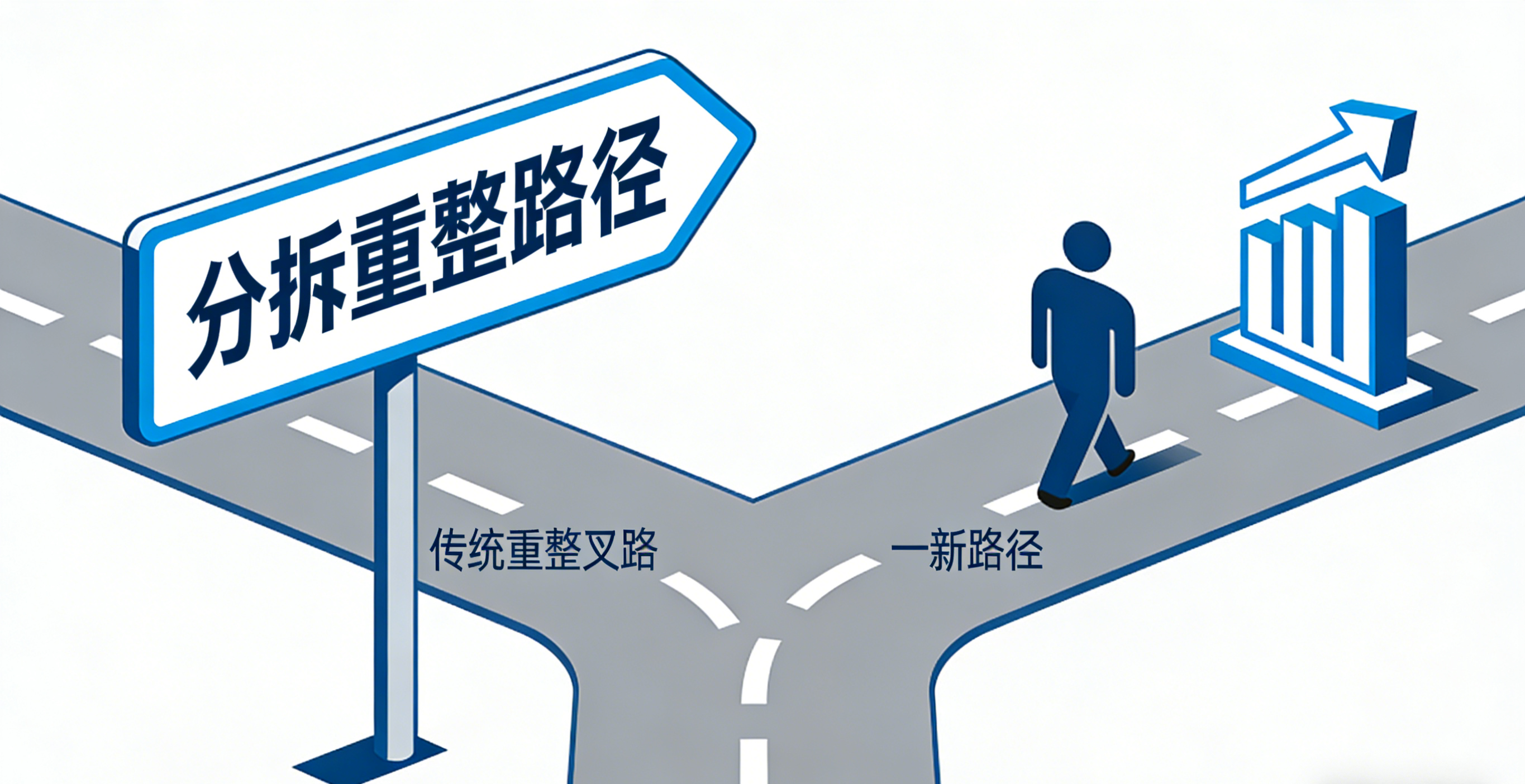
What's more tricky is that the traditional reorganization model is difficult to apply — if the entire company is liquidated in bankruptcy, the high-quality IoT module business will be forced to go down with it; if investment is introduced for the entire company, potential investors shrink back in the face of the huge loss hole of the consumer electronics business. Mr. Wang, the chairman of Company H, was filled with anxiety: "Our most valuable IoT business is like being tied to a sinking ship, watching it sink together helplessly."
II. Our Firm's Intervention: Designing a "Business Isolation" Spin-off Reorganization Plan
Upon accepting the entrustment, our firm's corporate business team immediately stationed at Company H to conduct in-depth due diligence. We found that the two businesses are actually independent of each other at the asset, customer and supply chain levels, laying a feasible foundation for spin-off. Based on this, we innovatively proposed a "business isolation" spin-off reorganization plan — stripping out the high-quality business to "rebirth from nirvana" and allowing the inferior business to liquidate in accordance with the law for a "dignified exit".
2.1 Legal Structure Restructuring: Spin Off a Subsidiary to Achieve Complete Isolation
The first step of the plan is to spin off the IoT module business into a wholly-owned subsidiary "New H Technology" through a shareholder meeting resolution by way of survival spin-off. The original Company H retains the consumer electronics business and enters liquidation proceedings. This operation achieves complete isolation of three core elements:
-
Asset Isolation: 17 core patents, exclusive equipment for IoT business, accounts receivable, etc., are assigned to the new company -
Liability Isolation: Debts are classified and split according to their attributes, with accounts payable and inventory loans of the consumer electronics business remaining with the original company -
Business Isolation: Customer contracts are re-signed and supplier relationships are reorganized to ensure independent operation
2.2 Capital Restructuring: Industrial Fund Invests 120 Million Yuan, Original Shareholders Follow Up with Intellectual Property
The spun-off new company needs funds to expand production capacity and seize market share. Our firm designed a financing plan simultaneously:
-
Industrial Fund Holds Controlling Stake (60%): A well-known industrial fund is introduced to subscribe for 60% of the new company's equity with 120 million yuan in cash, and the funds are earmarked for the expansion of IoT module production capacity and technological R&D -
Original Shareholders Follow Up (40%): Original shareholders subscribe for the remaining 40% of equity by valuing 17 core patents and other intellectual property rights at 80 million yuan, ensuring the technical team continues to participate in operations and stabilizing core backbones
This structure not only injects development funds into the new business but also retains the technical genes through the shareholding of original shareholders, while the entry of the industrial fund brings industrial resources and standardized governance.
2.3 Debt Restructuring: Classified Splitting to Balance Creditors' Interests
The most sensitive issue in spin-off reorganization is debt. Our firm negotiated with 13 major creditors one by one and finally reached a "Debt Division Agreement":
-
70% of Debts Assigned to the Original Company: Approximately 21 million yuan of supplier arrears and bank loans related to the consumer electronics business will be repaid by the original company through liquidated assets -
30% of Debts Transferred with High-Quality Assets: Approximately 9 million yuan of debts related to the IoT business will be assumed by the new company and repaid in installments over 5 years to reduce cash flow pressure
After the signing of the agreement, a third-party audit institution issued a "Fairness Report on Spin-off", proving that the division of assets and liabilities complies with market fair value, effectively responding to the suspicion of "malicious evasion of debts".
III. Operational Difficulties and Solutions
3.1 Sorting Out and Changing Asset Ownership
In the long-term operation of the two businesses, there was cross-use of assets. Our team verified equipment ledgers, patent registries and procurement contracts one by one to clarify asset ownership. Finally, we assisted in completing the ownership change registration of 17 patents to ensure the compliant transfer of intellectual property rights to the new company.
3.2 Cleaning Up Related Transactions
There were related transactions within the original Company H where the IoT business "transfused blood" to the consumer electronics business — supplying chips and providing technical support at internal prices. Our firm promoted the signing of a "Business Spin-off Agreement", clarifying the settlement method of related transactions before the spin-off, cutting off cross-subsidies after the spin-off to ensure the independent operation of the new company.
3.3 Smooth Transition of Customer and Supplier Relationships
To avoid customer panic caused by business spin-off, our firm assisted in designing a template for "Customer Notification Letter". The sales team of the new company visited core customers one by one to explain the background of the spin-off and its positive impact on customers — the new company will focus on the IoT business with stronger service capabilities. Eventually, more than 90% of core customers completed contract re-signing.
IV. Reorganization Results: 30 Million Yuan in Orders in Three Months, Turning Profitable in Six Months
On August 19, 2024, the spin-off reorganization plan was officially implemented. After the independent operation of the new company "New H Technology", it showed strong vitality:
-
Order Explosion: Within three months after the reorganization, relying on its focused brand image and expanded production capacity, the new company continuously won orders in the smart city and industrial internet sectors, with a total amount exceeding 30 million yuan -
Profit Inflection Point: Achieved profitability within six months, completely getting rid of the loss drag from the original consumer electronics business -
Valuation Increase: After the entry of the industrial fund, the governance structure of the new company was optimized, and the post-investment valuation reached 200 million yuan, a substantial increase compared with the market value of the original Company H under the delisting risk
The consumer electronics business of the original Company H entered liquidation proceedings, disposed of inventory and collected accounts receivable in accordance with the law, and repaid creditors in proportion to achieve a "dignified exit".
V. Case Enlightenment: Providing a New Rebirth Path for Enterprises with "Both High-Quality and Inferior Assets"
This case verifies the feasibility of the "business spin-off reorganization" model in technology enterprises. For enterprises with both high-quality businesses and non-performing assets, the traditional "holistic" reorganization often fails to balance both sides. Achieving business isolation through legal structure restructuring, injecting capital through capital restructuring, and balancing the interests of all parties through debt restructuring can achieve the dual goals of "protecting high-quality assets and clearing inferior assets".
At present, our firm has summarized the experience of this case into the "Guidelines for Spin-off Reorganization Operation", and continues to provide full-life-cycle legal services for technology enterprises facing similar difficulties to help them achieve healthy rebirth.
-
- Cross-border Contract Restructuring Recovers Massive Losses for Foreign Trade Companies
small and medium-sized textile fabric export enterprise (hereinafter referred to as "our client") has been deeply engaged in the EU market for many years, mainly engaged in the export of cotton, linen and chemical fiber fabrics, with an annual export volume of about 12 million US dollars.182025-12 -
- Environmental Compliance Renovation Revitalizes Chemical Enterprises
A small and medium-sized fine chemical enterprise was ordered to suspend production for rectification by the environmental protection department due to excessive waste gas emissions, facing a daily fine of 20,000 yuan.292025-10