






The fast-moving consumer goods industry refers to a commodity sales industry with high consumption frequency, short usage time, a wide range of consumer groups, and high requirements for consumer convenience. Fast moving consumer goods mainly refer to retail products such as alcohol, water, beverages, grain and oil daily necessities, and convenience foods in daily life. Representative brand enterprises exist within each product category, such as Kangshifu, Yibao, Nestle, Daodaquan, etc. Traditional fast-moving consumer goods supply chain companies are born to meet the needs of brand enterprises. They serve as a bridge between brand enterprises and downstream retailers, mainly saving sales costs, warehousing costs, and logistics costs for brand enterprises.
1、 Business Model Analysis
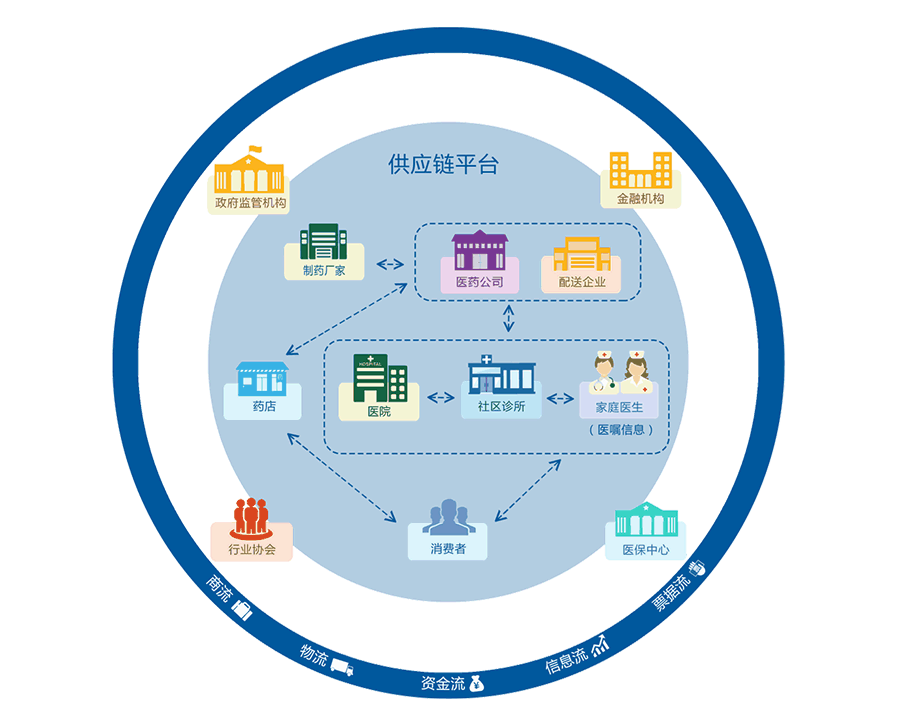
The business model of traditional fast-moving consumer goods supply chain companies is relatively simple and direct, mainly involving four links: procurement, logistics, warehousing, and sales. It connects to procurement and provides purchasing reference for brand enterprises, utilizing its own resources to solve the sales problems of brand enterprise products; Offline sales allocate sellable resources to retailers, while also requiring warehousing and logistics resources.
1. Procurement process
Supply chain companies, through their deep cultivation of the fast-moving consumer goods industry and accumulated resources and reputation, sign distributor contracts with brand enterprises. The distributor contracts stipulate distribution areas, ordering processes, price management, market management, delivery methods, sales targets, advertising and promotion, breach of contract responsibilities, and other contents.
The essence lies in the fact that brand enterprises select suitable supply chain companies as brand distributors in a certain region across the country, and the supply chain companies are responsible for the logistics and sales of goods in that region, setting sales targets. If the supply chain companies cannot achieve the sales targets, the brand enterprises can unilaterally terminate the contract and demand that the supply chain companies bear corresponding breach of contract responsibilities, in order to save the logistics and sales costs of the brand enterprises. Brand enterprises are mainly responsible for supply, setting price systems, supervising the completion of sales targets and market management of the supply chain companies.
The size of a supply chain company's business scale is closely related to how many brand enterprise distributor qualifications it can obtain. The fast-moving consumer goods industry still relies heavily on supply chain companies to solve the information gap between brand merchants and retailers regarding procurement and sales.
2. Logistics process
With logistics activities as the core, coordinate the production and supply of branded enterprises, customer service and order processing in the sales field. Supply chain companies usually have their own logistics resources and also cooperate with common logistics companies in the market. The logistics process is also a core part of the business model of supply chain companies, and the ability to mobilize corresponding logistics resources to meet their own procurement and sales needs is a part of the core competitiveness of supply chain companies.
3. Storage process
Warehousing is handled by the supply chain company itself, and the amount of warehousing is an important reflection of the company's business scale. Usually, self built warehouses or leased warehouses are used. It is important to pay attention to the management of warehousing by supply chain companies, with regular inventory checks and the safekeeping of purchase and shipment vouchers being key aspects of the warehousing process.
4. Sales process
The sales process is the profit generating stage of the supply chain company. As mentioned earlier, brand enterprises and supply chain companies will agree on a pricing system when signing contracts. This pricing system is determined by the brand enterprise. In the fast-moving consumer goods industry, distributors have fixed pricing when selling goods to downstream retailers, and supply chain companies must not violate it when selling to downstream retailers.
Downstream retailers, due to the fixed brand effect of various fast-moving consumer goods in the market, consumers are accustomed to purchasing well-known fast-moving consumer brands, such as mineral water brands like Yibao and Nongfu Spring, and instant noodle brands like Kangshifu and Uni President. These brands have a huge consumer market. Retailers often purchase products from the brand in order to ensure their own sales and revenue. Purchasing from supply chain companies with legal distributor qualifications is the best choice for retailers.
Based on the above industry conventions, traditional fast-moving consumer goods supply chain companies make profits by earning the price difference from purchasing goods from brand merchants to selling to retailers. Their profit model is single, but stable and guaranteed, usually only requiring the maintenance of stable brand enterprise and retailer resources. During this process, the supply chain company will sign corresponding sales contracts with downstream retailers.

2、 Legal Risk Analysis
Based on the above business model analysis, the main legal risks for traditional fast-moving consumer goods supply chain companies may include the following:
1. The risk of default caused by excessive pursuit of company profits
The default risk mainly comes from the dealer contracts signed between traditional fast-moving consumer goods supply chain companies and brand enterprises. Based on the needs of market management, brand enterprises do not allow distributors to sell across regions or violate the pricing system by lowering prices. There will also be strict provisions in the distributor contract regarding the rights and obligations of this part.
But in the industry, some supply chain companies engage in "smuggling" behavior. Cross regional price reduction refers to the practice of distributors disregarding distribution agreements and the long-term interests of manufacturers to sell products at lower prices across regions. This behavior violates the contractual agreement and market standards, constitutes a breach of contract, and requires legal responsibility as stipulated in the contract, even leading to litigation. From a business perspective, it is detrimental to the company's reputation and not conducive to its long-term business development.
2. Funding risk
The fast-moving consumer goods industry is a typical industry with fast capital turnover and circulation. The main means for brand enterprises to save their own sales costs by choosing supply chain companies is to require the supply chain companies to prepay for goods and advance funds for brand enterprise promotional activities. However, downstream distributors, represented by supermarkets, have payment terms when making payments to supply chain companies, which are monthly, quarterly, and annual.
In the process of procurement, sales, and payment collection, supply chain companies face time differences and financing risks. Once the company's funds become insufficient to meet its own procurement needs and the supply needs of downstream distributors, a series of chain default behaviors will occur, and even operational crises may arise. Therefore, financial barriers are a major industry barrier for traditional supply chain companies in the fast-moving consumer goods industry.
3. Risks of non-standard contract management
Traditional fast-moving consumer goods supply chain companies have significant loopholes in contract management. Due to the large number of parties involved in upstream and downstream contracts, a large number of contracts are signed with external parties in the procurement and sales process. However, traditional fast-moving consumer goods supply chains often only focus on the practical operation of commodity procurement and sales, without paying attention to or directly ignoring contract management in economic activities.
There are risks of non-standard contract management, such as untimely signing of contracts with upstream brand enterprises and downstream distributors, incomplete preservation of contract related documents, and lack of contract management systems. Due to improper storage of the contract itself, supplementary or modified documents, or failure to timely archive and preserve records of correspondence, there is a legal risk of inability to provide evidence in the event of a contract dispute, which may harm one's own interests.
-
- What Are the Matters Related to Contract Termination in the Civil Code
Contracts are ubiquitous in our lives. Whether it is corporate trade or the daily necessities, clothing, food, housing and transportation of natural persons, contracts need to be concluded everywhere. In recent years, due to the impact of the COVID-19 pandemic, the number of cases requesting contract rescission has increased significantly. This article intends to introduce the concept, types, procedures and other related issues of contract rescission.102023-02 -
- The Powers of the Legal Representative and the Main Risks They Face in the Process of Performing Their Duties
Clients often consult lawyers: "Our group company plans to establish a project company externally and has decided to appoint me as the legal representative of the company. Lawyer, could you tell me about the powers I will have as this legal representative and the risks I may face in performing my duties?" This article specifically analyzes these issues:202022-12